
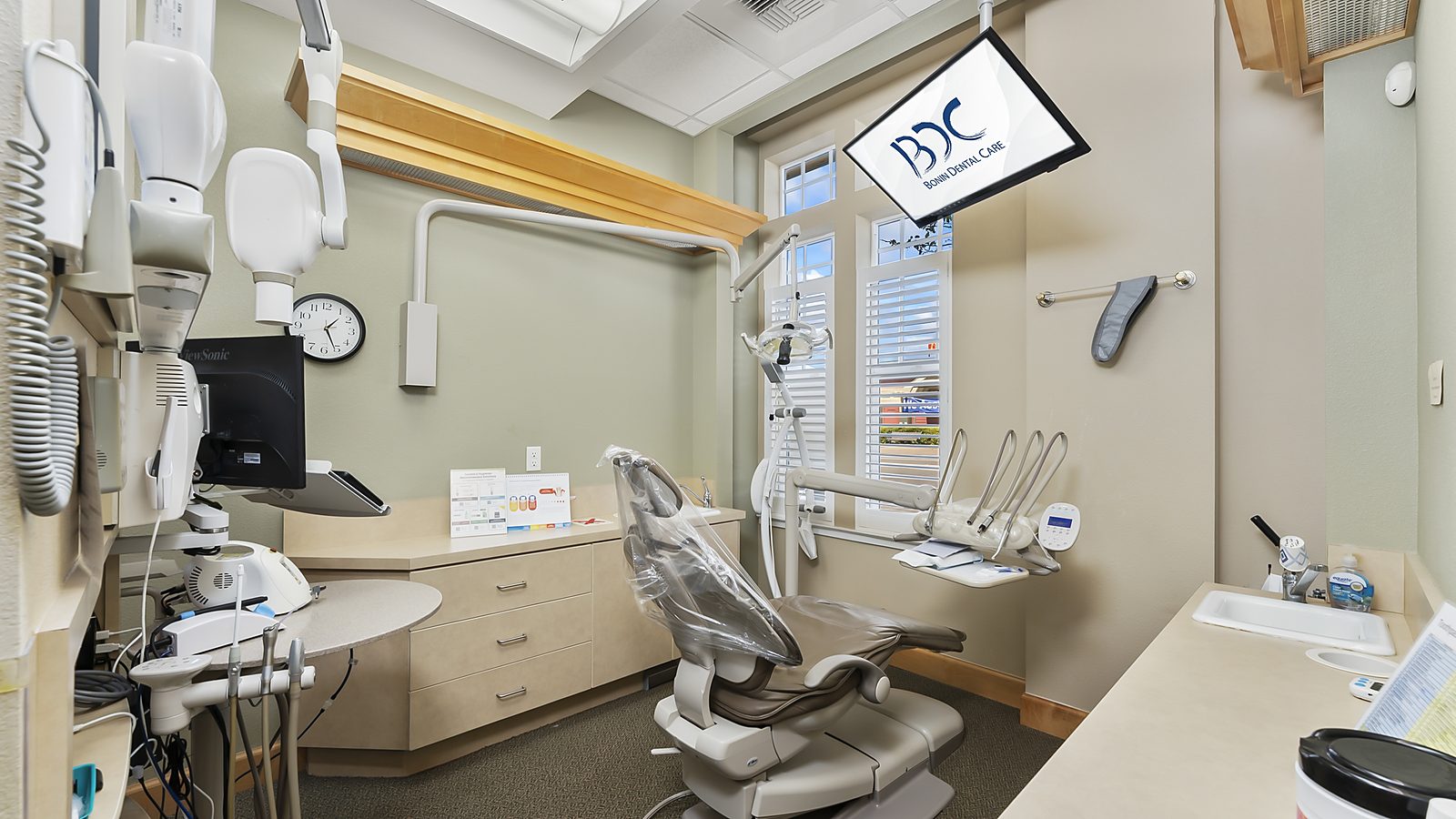
TMJ Treatment for Guerneville Patients
Relieve jaw pain, clicking, and stiffness. Comprehensive diagnosis and conservative treatment of temporomandibular joint disorders.
TMJ Treatment for Guerneville
Why Guerneville patients choose Bonin Dental Care
Jaw pain, clicking, or stiffness can originate from the temporomandibular joint (TMJ), the complex hinge connecting your lower jaw to your skull. Stress, muscle tension, bite problems, or injury can trigger TMJ dysfunction. Symptoms range from mild clicking to severe pain that radiates into your neck, shoulders, or head. For Guerneville residents experiencing TMJ problems, conservative treatment often relieves symptoms. We diagnose the source, recommend rest and muscle relaxation, fit a night guard if needed, and address any bite problems contributing to dysfunction.
Guerneville's artists, creative workers, and residents often experience stress-related jaw clenching or teeth grinding. The river valley's relaxed pace doesn't prevent stress entirely, and many residents grind their teeth unconsciously at night. A custom night guard protects teeth and reduces muscle tension. For hospitality workers and self-employed residents who depend on their voice and jaw for work, addressing TMJ dysfunction is practical investment in function.
TMJ treatment benefits from a dentist who understands bite mechanics and joint anatomy. Dr. Bonin assesses your bite carefully and fits night guards precisely. He doesn't oversell treatment; conservative approaches often resolve dysfunction.
Concerns we hear most from Guerneville
TMJ dysfunction in Guerneville often involves muscle tension from stress, clenching, or grinding. Some patients have bite discrepancies that overload the joint. Others experienced trauma or have degenerative joint changes. We assess your bite, jaw movement, and joint sounds clinically. X-rays may be needed. Most cases respond to conservative treatment: muscle relaxation exercises, stress reduction, warm compresses, and a night guard to protect teeth and reduce muscle tension. Rarely, more aggressive treatment like physical therapy or specialist referral is needed, but we try conservative approaches first.
Neighborhood & Travel
Getting to us from Guerneville
Guerneville's artistic and creative residents often experience stress-related jaw tension. Writers at their desks, musicians practicing, and artists focused on detailed work often clench unconsciously. The relaxed river valley culture doesn't prevent underlying stress and tension. TMJ dysfunction is particularly common in populations experiencing chronic mild stress. Night guard therapy is especially popular in creative communities because it's noninvasive and often dramatically effective.
Clinical Depth
How Dr. Bonin approaches TMJ Treatment
The temporomandibular joint is a complex hinge where the lower jaw attaches to the skull. It includes a disc that cushions the joint and muscles that open and close the jaw. Dysfunction can involve muscle tension, disc displacement, inflammation, or degenerative changes. Assessment includes palpating the joint, evaluating jaw opening and closing, listening for sounds, and assessing bite. X-rays or MRI may be needed in complex cases. Conservative treatment includes muscle relaxation exercises, night guard wear, stress reduction, posture correction, and heat therapy. Occlusal adjustment or orthodontics addresses bite problems. Most patients improve with these approaches.
Why This Matters Locally
Fit for Guerneville lifestyle
For Guerneville residents whose work depends on their voice, presence, or jaw function, TMJ relief restores professional confidence. Musicians can perform without pain. Artists can focus on detailed work without jaw tension. Hospitality workers can engage with guests without distraction from jaw discomfort.
About This Service
TMJ Treatment
Your jaw joint works harder than you think. It opens and closes thousands of times a day, handles the stress of chewing, and reacts to tension in your neck, shoulders, and face. When the joint or surrounding muscles get out of balance, the results show up as clicking, popping, pain while eating, or that locked feeling first thing in the morning. Temporomandibular joint disorder (TMJ) isn't always about one single cause. We often see a mix: nighttime grinding or clenching (bruxism), uneven bite pressure, forward head posture from desk work, or stress-related muscle tension. The joint itself may have inflammation, and the muscles around it go into protective spasm. Left unaddressed, these patterns reinforce each other, and what started as occasional discomfort becomes something that affects how you eat, speak, and sleep. At Bonin Dental Care, we start with a thorough evaluation. Dr. Bonin listens to what you're experiencing, examines your bite alignment and jaw movement, and takes imaging if needed to see what's actually happening inside the joint. From there, we build a treatment plan that targets your specific situation, whether that's a custom occlusal splint to wear at night, specific jaw exercises, or lifestyle adjustments. Our goal isn't just to manage symptoms, but to help you get back to function.
Common Questions
TMJ Treatment in Guerneville: FAQ
What causes jaw clicking and popping?
How does a night guard help TMJ pain?
Can bite problems cause TMJ pain?
What exercises help TMJ dysfunction?
When do I need to see a TMJ specialist?
Have a question we did not cover? Reach out to our team.
Keep Exploring
Related pages for Guerneville and TMJ Treatment
More services for Guerneville patients
Written specifically for your community, not a general page.
- Dental Implant Restoration (Surgical Care Coordinated with Specialists) for Guerneville
- Full-Arch Dental Implants (All-on-4 / All-on-X, Coordinated with Specialists) for Guerneville
- Invisalign Clear Aligners for Guerneville
- Porcelain Veneers for Guerneville
- Cosmetic Dentistry & Smile Design for Guerneville
- Emergency Dentistry for Guerneville
- Sedation & Anxiety Dentistry for Guerneville
- Tooth-Colored Fillings for Guerneville
TMJ Treatment in other nearby areas
Recommend us to friends or family in these Sonoma County communities.
- TMJ Treatment for Healdsburg
- TMJ Treatment for Santa Rosa
- TMJ Treatment for Rohnert Park
- TMJ Treatment for Sebastopol
- TMJ Treatment for Cloverdale
- TMJ Treatment for Larkfield-Wikiup
- TMJ Treatment for Mark West Springs
- TMJ Treatment for Fulton
Find Us
Visit Our Windsor Office
Office Hours
- Mon
- 8 AM to 5 PM
- Tue
- 8 AM to 5 PM
- Wed
- 8 AM to 5 PM
- Thu Today
- 8 AM to 5 PM
- Fri
- Closed
- Sat
- Closed
- Sun
- Closed