TMJ Treatment
Comprehensive TMJ evaluation and treatment to reduce pain, clicking, and stiffness. Includes custom splints and lifestyle guidance.
About This Service
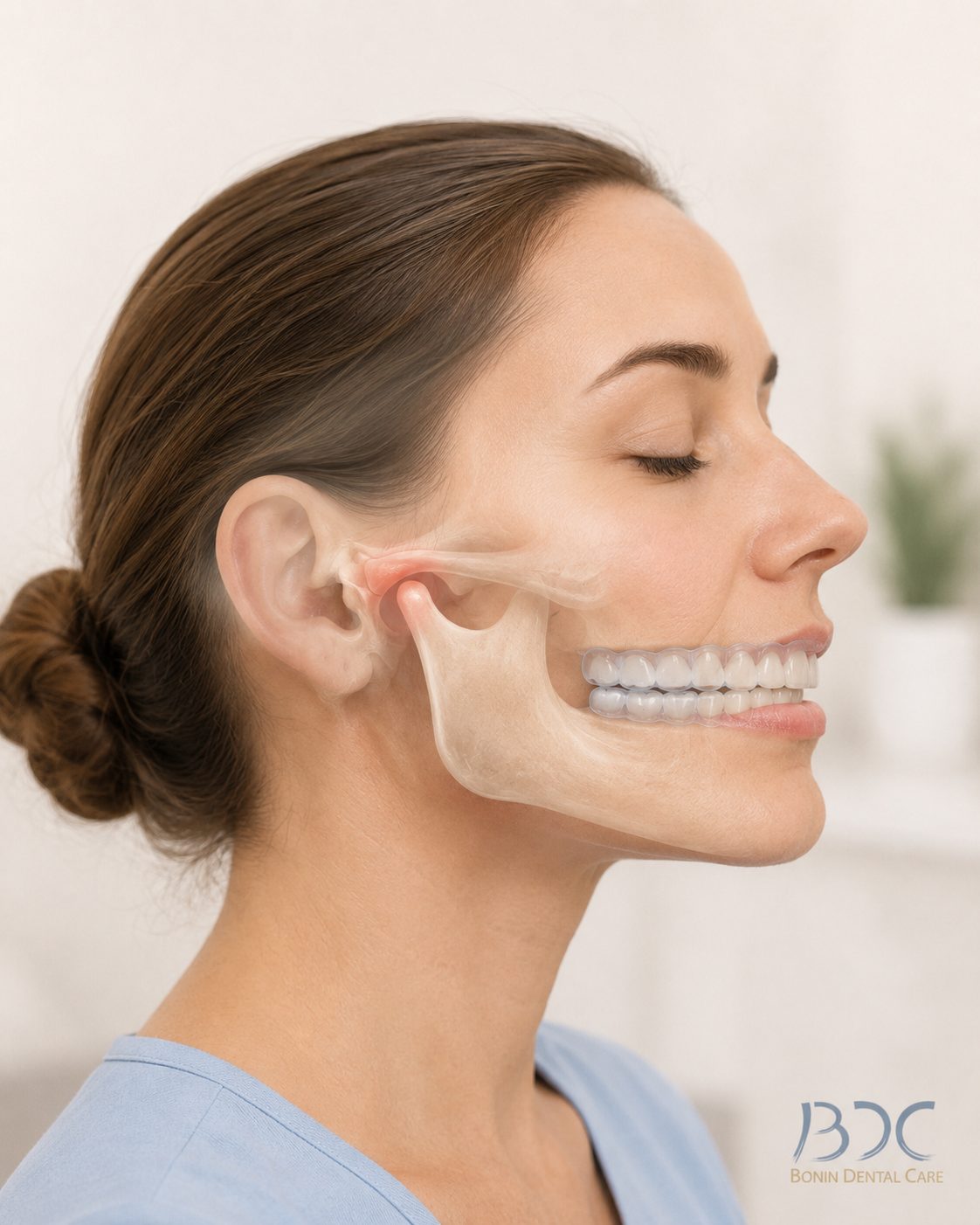
Your jaw joint works harder than you think. It opens and closes thousands of times a day, handles the stress of chewing, and reacts to tension in your neck, shoulders, and face. When the joint or surrounding muscles get out of balance, the results show up as clicking, popping, pain while eating, or that locked feeling first thing in the morning.
Temporomandibular joint disorder (TMJ) isn't always about one single cause. We often see a mix: nighttime grinding or clenching (bruxism), uneven bite pressure, forward head posture from desk work, or stress-related muscle tension. The joint itself may have inflammation, and the muscles around it go into protective spasm. Left unaddressed, these patterns reinforce each other, and what started as occasional discomfort becomes something that affects how you eat, speak, and sleep.
At Bonin Dental Care, we start with a thorough evaluation. Dr. Bonin listens to what you're experiencing, examines your bite alignment and jaw movement, and takes imaging if needed to see what's actually happening inside the joint. From there, we build a treatment plan that targets your specific situation, whether that's a custom occlusal splint to wear at night, specific jaw exercises, or lifestyle adjustments. Our goal isn't just to manage symptoms, but to help you get back to function.
Is This Right For You?
Who Benefits Most From TMJ Treatment
You're a good candidate if you experience clicking or popping in your jaw, morning stiffness or soreness, difficulty opening wide without pain, or nighttime grinding (often discovered because your bed partner hears it or you wake with a sore jaw). Many patients in their 30s and 50s develop TMJ issues, though it can happen at any age. Stress, posture habits, and clenching during sleep are common risk factors. Some people come in after noticing their teeth are wearing down unevenly, which is often a sign of grinding-related TMJ strain.
If you're already in acute, severe pain or have been diagnosed with joint degeneration or significant structural damage, you may need a referral to a specialist. We'll evaluate whether that's the case and guide you to the right next step. In most situations, though, conservative treatment started early works well and prevents progression.
Our Approach
Why Patients Choose Bonin Dental Care For TMJ Treatment
Dr. Bonin completed a U.S. Navy General Practice Residency after dental school, which included extensive training in occlusion (bite mechanics) and treating complex dental cases. He's spent over 24 years working with patients who grind, clench, and have joint dysfunction, and he knows the patterns that lead to long-term improvement. His approach is methodical: diagnose accurately, start conservatively, and adjust based on how you respond.
We use high-quality materials for custom splints and work with trusted local labs to ensure proper fit and durability. The splint design isn't one-size-fits-all; it's customized to your bite pattern and symptoms. Whether you need light stabilization at night or a more protective splint depends on your situation, and we explain the reasoning behind our recommendation.
Patients tell us that the combination of the right splint, clear instructions on how to adjust to it, and follow-up care makes a real difference. We're not just handing you an appliance; we're coaching you through the adjustment period and helping you understand what triggers your symptoms so you can avoid them. Many patients in Windsor and Sonoma County come to us specifically because of that ongoing support.
Patient Benefits
Why patients choose us for tmj treatment
- Reduces morning jaw soreness and nighttime grinding-related pain
- Custom occlusal splint fits your bite precisely for maximum comfort
- Addresses both immediate pain and underlying joint mechanics
- Non-invasive approach with clear, measurable improvement timelines
- Includes practical guidance to prevent flare-ups long-term
- Works well alongside stress management and physical therapy
What to Expect
From First Visit To Final Result
At your first visit, expect to spend time talking. We need to understand your symptoms, your schedule, stress levels, and what matters most to you about your function. Dr. Bonin will do a detailed exam that includes palpating the muscles, assessing how your jaw moves, and checking your bite alignment. He may use a bite registration tool to capture your bite precisely. If imaging is needed, we'll take it that day or schedule a follow-up visit for that. You'll leave with a clear picture of what we found and what we recommend.
If a splint is the right choice, we'll take impressions and send them to the lab. This appointment typically takes 45 minutes to an hour. There's no discomfort during the process, but it does involve some detailed impressions to make sure the lab gets an accurate model of your upper or lower arch. We'll discuss wear schedules, care, and what to expect during the first few nights; most patients need a brief adjustment period.
When your splint is ready, you'll come back for the delivery and fitting appointment. Dr. Bonin or one of our clinical team will check the fit carefully, make sure it doesn't hit hard spots or feel too loose, and adjust it as needed. This is also when you'll get step-by-step instructions on insertion, removal, and cleaning. Many people worry about talking or sleeping with a splint; we'll address those concerns directly. You'll also get specific guidance on when to wear it (most people wear it at night, but some wear it during the day if daytime clenching is the main issue), and what signs of improvement to look for.
What to Expect
Our Approach
Every visit follows a clear, considered sequence. No surprises, no guesswork.
- 1
Initial consultation includes a detailed history of your symptoms, onset, and what makes them better or worse.
- 2
Dr. Bonin performs a comprehensive jaw joint examination, checking range of motion, bite alignment, and muscle tenderness.
- 3
Imaging (X-rays or CBCT) may be taken to evaluate joint structure and rule out other issues.
- 4
We discuss findings with you and outline treatment options, starting with the most conservative approach.
- 5
If a splint is recommended, we take detailed impressions and bite records for your custom appliance.
- 6
The splint is fabricated in the lab to fit your bite precisely and delivered at a separate visit.
- 7
Initial adjustment appointment ensures proper fit and comfort; you'll get detailed wear and care instructions.
- 8
Follow-up visits track your progress, make any splint adjustments, and refine your home care strategy based on results.
After Your Appointment
Recovery And Long-Term Care
The first night or two in a splint can feel awkward, and that's normal. Your mouth and jaw muscles are adjusting to something new. Most patients adapt within 3 to 7 days. You might notice slightly increased saliva flow or feel like you're thinking about your jaw more than usual during that period; both are temporary. Some people experience mild soreness in the jaw or muscles as they relax for the first time in months, which usually fades quickly. If you experience significant pain or the splint feels like it's not sitting right, call us right away so we can adjust it.
Long-term success depends on consistent wear and ongoing awareness of your habits. Most patients find their symptoms improve noticeably within 2 to 4 weeks of regular use. We'll ask you to come back for a progress check 2 to 4 weeks after you start wearing your splint. If it's helping, we'll refine your routine and discuss lifestyle adjustments to keep gains. If something isn't working, we'll troubleshoot together. Some patients also benefit from physical therapy or stress management alongside the splint. Your splint will need occasional adjustments over time and may need replacement after several years of regular use, but many patients keep the same splint for years with minimal maintenance.
Before You Decide
Costs, Insurance, And Timing
Cost varies depending on whether you need imaging, which type of splint is recommended, and whether you need additional visits for adjustments or therapy. Most dental insurance plans cover at least a portion of splint therapy when there's a clinical diagnosis of TMJ disorder. We'll discuss what your plan covers before we proceed, and we can provide you with an itemized estimate so there are no surprises. If cost is a concern, patient financing options are available to help make treatment manageable.
The timeline from consultation to wearing your splint usually takes 2 to 3 weeks. The examination visit takes about an hour, impressions take another hour, and the lab needs 1 to 2 weeks to fabricate your custom appliance. Delivery and adjustment is another appointment. If imaging is needed or if we decide to try conservative care first before moving to a splint, the timeline may shift. Most patients see meaningful improvement within 1 to 2 months of consistent splint use, though some see results within days.
FAQ
TMJ Treatment: Common Questions
Does a TMJ splint feel weird? Will I be able to sleep with it?
What's the difference between a splint and a night guard for grinding?
How long do I have to wear the splint?
Can TMJ disorder be cured, or is it just managed?
What if the splint doesn't help?
Is there anything I can do at home to help my TMJ?
Do I need X-rays or imaging?
What insurance covers TMJ treatment?
Have a question we did not cover? Reach out to our team.
Helpful Links
Explore related topics
Whether you are evaluating tmj treatment for the first time or planning a comprehensive treatment that combines several procedures, the resources below answer the questions patients in Windsor and across Sonoma County most often ask before booking.
Related Care
About the Practice
Plan Your Visit
Available Across Sonoma County
TMJ Treatment for patients in these areas
Each link below opens a page written for that community, with drive times, local landmarks, and specific answers to the tmj treatment questions we hear most from your area.
- TMJ Treatment for Healdsburg
- TMJ Treatment for Santa Rosa
- TMJ Treatment for Rohnert Park
- TMJ Treatment for Sebastopol
- TMJ Treatment for Cloverdale
- TMJ Treatment for Larkfield-Wikiup
- TMJ Treatment for Mark West Springs
- TMJ Treatment for Fulton
- TMJ Treatment for Forestville
- TMJ Treatment for Petaluma
- TMJ Treatment for Sonoma
- TMJ Treatment for Oakmont
- TMJ Treatment for Cotati
- TMJ Treatment for Guerneville
- TMJ Treatment for Geyserville
- TMJ Treatment for Fountaingrove
- TMJ Treatment for Rincon Valley
Related Services
Explore related care
General Dentistry
Comprehensive exams, professional assessments, and preventive strategies designed to catch problems early and keep your smile healthy.
Learn moreTooth-Colored Fillings
Tooth-colored composite fillings restore decayed teeth with materials that match your natural smile and bond to tooth structure.
Learn more