
Dental Cleanings
Professional cleanings remove tartar and buildup that home care cannot reach, preventing decay and gum disease.
About This Service
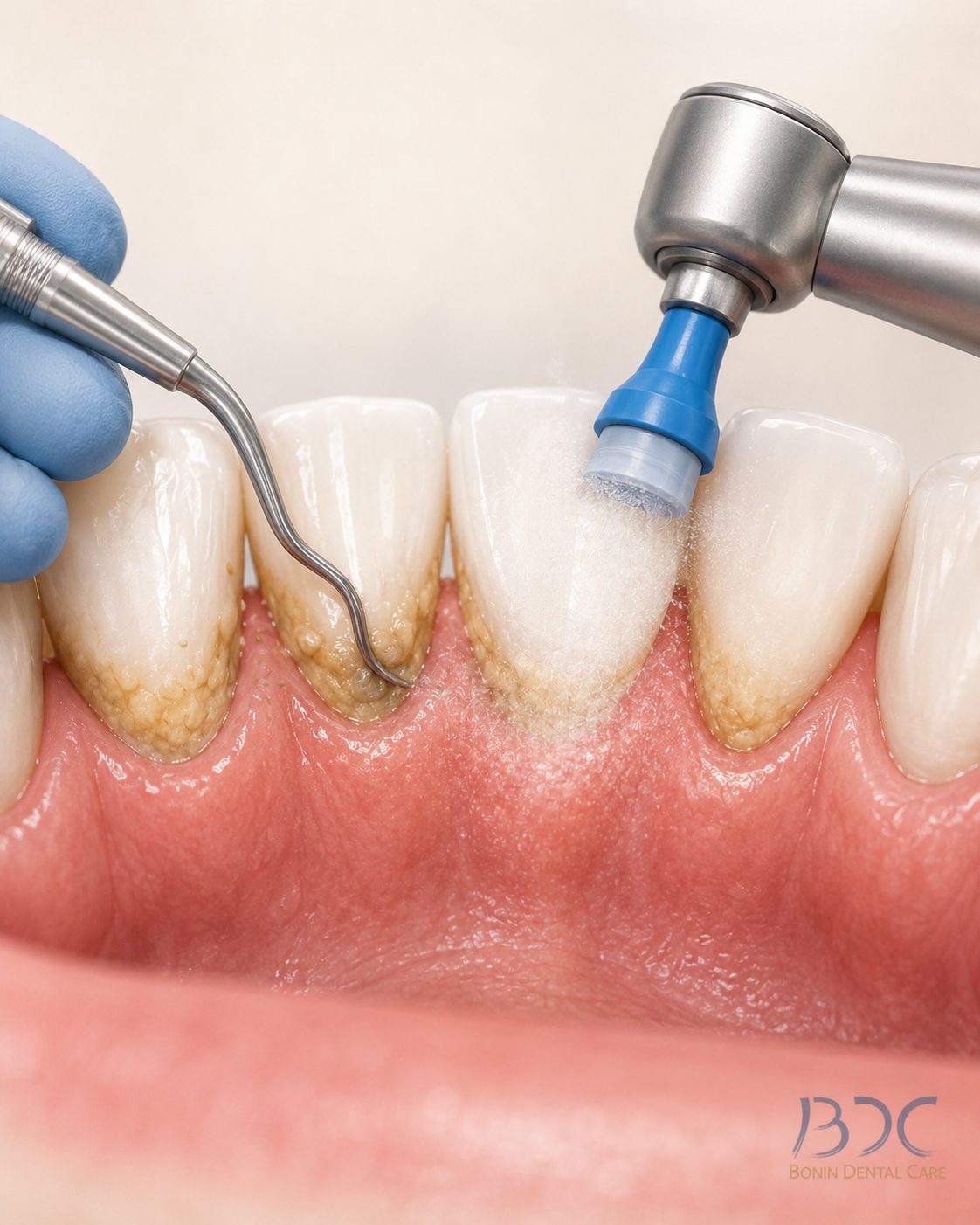
Most people brush and floss, but they're not removing everything. Plaque is a sticky film of bacteria that forms on your teeth multiple times daily. You can brush and floss it away. But in corners you miss, between tight contacts, and especially below the gumline, plaque hardens into tartar (also called calculus). Once tartar forms, your toothbrush can't remove it. Only a professional cleaning breaks it off.
Routine cleanings, called prophylaxis, happen above and just below the gumline. They're preventive and usually take 30 to 45 minutes. Most people need one every six months, and many find them pleasant. The hygienist uses ultrasonic scalers and hand instruments to gently remove buildup, then polishes your teeth smooth. For patients with gum disease, a deeper cleaning called scaling and root planing becomes necessary. This procedure goes below the gumline into pockets where bacteria hide. It's gentler than you'd expect and highly effective at stopping early gum disease in its tracks.
At Bonin Dental Care in Windsor, cleanings are performed by skilled hygienists under Dr. Bonin's direction. We tailor the cleaning to your specific needs. Patients with stable gums might only need the routine approach. Patients with bleeding or pockets receive deeper care. Either way, cleanings are an investment in preventing much costlier problems down the road.
Is This Right For You?
Who Benefits Most From Dental Cleanings
Nearly every patient with natural teeth or implants benefits from regular cleanings. This includes children (starting around age three), teenagers establishing good habits, working adults managing busy schedules, older adults with extensive dental history, and patients with implants (which need regular professional maintenance). Patients with excellent home care still benefit from a six-month cleaning because tartar forms despite diligent brushing and flossing. Patients with gum disease, diabetes, or heart disease often benefit from more frequent cleanings (every three to four months) because they're at higher risk for complications.
Patients with severe gum disease, active infection, or other complicating factors might need deeper cleaning (scaling and root planing) rather than routine prophylaxis. We assess this during the exam and discuss options.
Our Approach
Why Patients Choose Bonin Dental Care For Dental Cleanings
Bonin Dental Care employs experienced dental hygienists trained in the latest cleaning and gum assessment techniques. Our hygienists spend time educating patients about their home care, not just cleaning and moving to the next patient. They're comfortable working with anxious patients and adapt their approach to your comfort level. Dr. Bonin evaluates every patient's gums and provides oversight of deep cleanings when needed.
We use ultrasonic scaling technology and high-quality hand instruments, which means efficient, effective cleaning with minimal trauma to sensitive tissues. Our fluoride treatment options include different formulations for patients with sensitivity or specific needs. We believe a cleaning appointment is an opportunity to teach you what's working in your home routine and what needs adjustment. You leave understanding your gum health status and empowered to protect it.
Patient Benefits
Why patients choose us for dental cleanings
- Removes hardened tartar that brushing and flossing cannot eliminate.
- Prevents cavities and gum disease by disrupting the bacteria colonies beneath the gumline.
- Provides early detection of gum disease so treatment can start at an earlier, easier stage.
- Polishes teeth, brightening them and removing stubborn surface stains.
- Allows Dr. Bonin to assess gum health and recommend preventive strategies.
- Reduces bad breath caused by bacterial buildup and early gum disease.
What to Expect
From First Visit To Final Result
You'll settle into the treatment chair and your hygienist will ask about any changes in your health, medications, or dental concerns. For a routine cleaning, no anesthetic is needed, though we can apply topical numbing gel if your gums are very sensitive. The hygienist uses an ultrasonic scaler, which vibrates and hums as it breaks tartar off your teeth. Most patients find the vibration and sound unusual but not unpleasant. You'll feel water spray and hear gentle splashing as buildup is loosened and washed away.
The cleaning typically takes 30 to 45 minutes for a routine appointment. After scaling, your teeth are polished with a gritty paste that tastes minty and leaves your teeth feeling smooth. Fluoride is applied last as a protective rinse. If you have a gum disease diagnosis, Dr. Bonin may recommend scaling and root planing instead. This procedure is similar but goes deeper below the gumline into pockets. It's often split across two appointments and may involve local anesthetic because we're working in sensitive areas. Most patients tolerate it very well.
What to Expect
Our Approach
Every visit follows a clear, considered sequence. No surprises, no guesswork.
- 1
Your hygienist reviews your health history and any concerns since your last cleaning.
- 2
Ultrasonic scaling instruments vibrate against tartar buildup, breaking it off efficiently.
- 3
Hand instruments are used for precise removal in tight areas and along the gumline.
- 4
Suction and frequent rinsing keep your mouth comfortable throughout the cleaning.
- 5
Polishing paste removes remaining surface stains and leaves teeth feeling smooth.
- 6
Fluoride treatment is applied to strengthen enamel and provide temporary cavity protection.
- 7
Your hygienist educates you on brushing and flossing technique specific to your mouth.
- 8
Dr. Bonin checks your gums and teeth, assessing health and recommending any additional care.
After Your Appointment
Recovery And Long-Term Care
After a routine cleaning, you can eat and drink immediately. Your mouth might feel slightly tender if your gums were inflamed or if you haven't had a professional cleaning in a while. This tenderness typically resolves within a few days. For deep cleanings (scaling and root planing), avoid very hot foods and drinks for a few hours while numbness wears off. Your gums might be tender for a few days and may bleed slightly when you brush. This is normal and usually settles quickly. Take care flossing gently for the first week, though do not skip flossing. Sensitivity to cold is common after deep cleaning and typically fades within a few weeks.
Before You Decide
Costs, Insurance, And Timing
Insurance usually covers routine cleanings and exams at 100 percent when performed by an in-network provider. Deep cleanings may be covered at 50 to 80 percent depending on your plan. We verify coverage before the appointment and provide an estimate. Routine cleanings are typically recommended every six months. Patients with gum disease, diabetes, or other risk factors might benefit from quarterly (every three months) cleanings. Dr. Bonin will recommend a schedule tailored to your needs.
From diagnosis to first cleaning, the timeline is quick. A routine cleaning is scheduled on a standard six-month recall basis. Deep cleanings can often be completed within two to four weeks if necessary. We prioritize based on the severity of gum disease and your availability.
FAQ
Dental Cleanings: Common Questions
Does a dental cleaning hurt?
Why do my gums bleed when flossed after a cleaning?
How often do I really need a cleaning?
Can professional cleanings wear down my enamel?
What's the difference between a cleaning and deep cleaning?
I have implants. Do they need professional cleaning?
Will a cleaning help freshen my breath?
Can I skip the cleaning and just do better at home?
Have a question we did not cover? Reach out to our team.
Helpful Links
Explore related topics
Whether you are evaluating dental cleanings for the first time or planning a comprehensive treatment that combines several procedures, the resources below answer the questions patients in Windsor and across Sonoma County most often ask before booking.
Related Care
About the Practice
Plan Your Visit
Available Across Sonoma County
Dental Cleanings for patients in these areas
Each link below opens a page written for that community, with drive times, local landmarks, and specific answers to the dental cleanings questions we hear most from your area.
- Dental Cleanings for Healdsburg
- Dental Cleanings for Santa Rosa
- Dental Cleanings for Rohnert Park
- Dental Cleanings for Sebastopol
- Dental Cleanings for Cloverdale
- Dental Cleanings for Larkfield-Wikiup
- Dental Cleanings for Mark West Springs
- Dental Cleanings for Fulton
- Dental Cleanings for Forestville
- Dental Cleanings for Petaluma
- Dental Cleanings for Sonoma
- Dental Cleanings for Oakmont
- Dental Cleanings for Cotati
- Dental Cleanings for Guerneville
- Dental Cleanings for Geyserville
- Dental Cleanings for Fountaingrove
- Dental Cleanings for Rincon Valley
Related Services
Explore related care
General Dentistry
Comprehensive exams, professional assessments, and preventive strategies designed to catch problems early and keep your smile healthy.
Learn moreTooth-Colored Fillings
Tooth-colored composite fillings restore decayed teeth with materials that match your natural smile and bond to tooth structure.
Learn more