Emergency Dentistry
Same-day or next-day treatment for toothaches, abscesses, trauma, and broken restorations. Call immediately.
About This Service
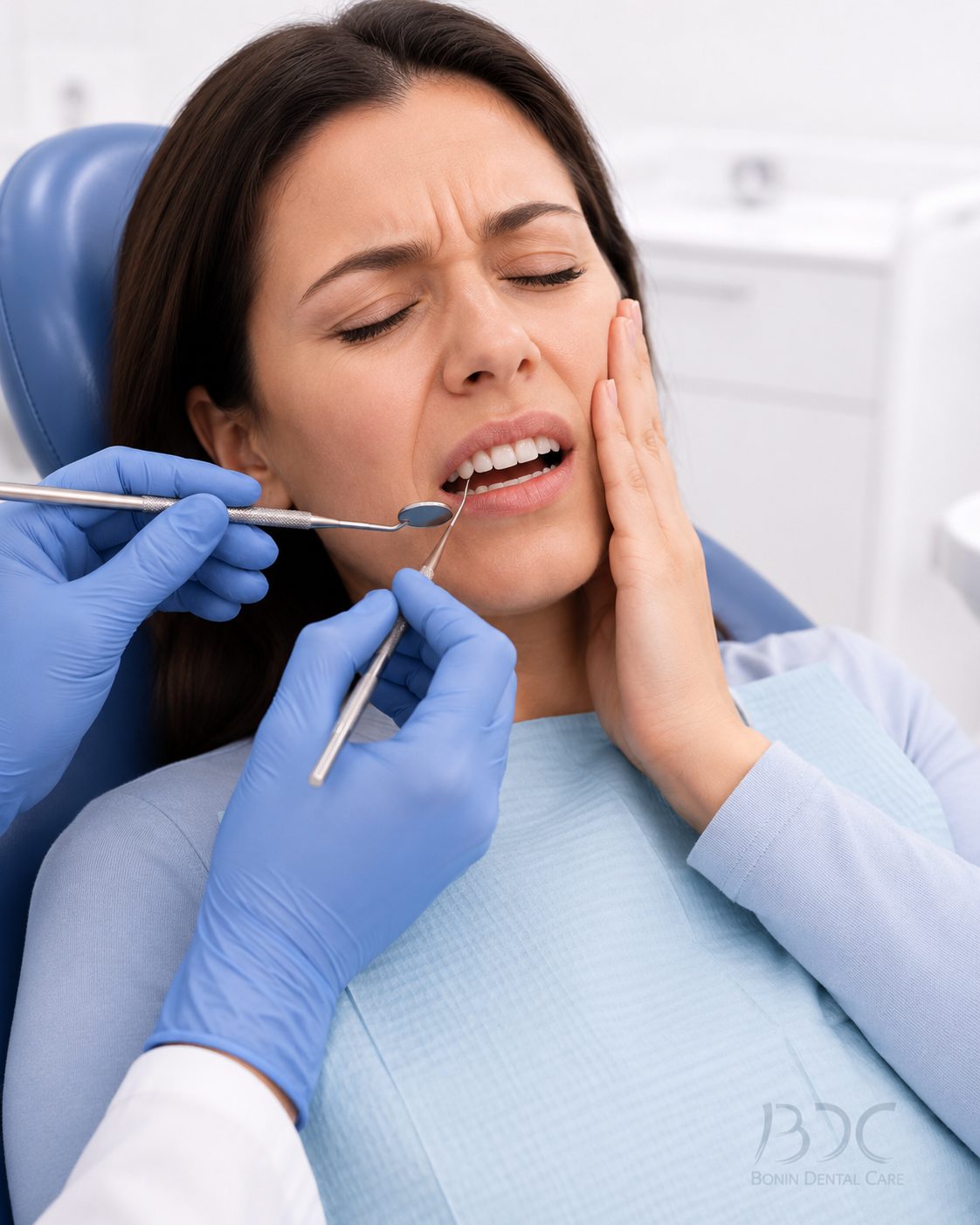
Dental emergencies don't schedule appointments. A tooth suddenly throbs at midnight. You bite down and feel a sharp crack. Your child takes a hockey stick to the face and loses a front tooth. A crown falls off while eating. These moments are stressful, painful, and urgent. At Bonin Dental Care, we've built our practice to handle them without making you wait.
An emergency isn't always catastrophic, but it always needs triage. Severe tooth pain signals infection, decay, or bite trauma. An abscess is a pocket of infection and needs drainage to stop the spread. A knocked-out tooth has a narrow window (about an hour) where it can be saved if replanted correctly. A broken crown or lost filling exposes the tooth and requires temporary coverage to stop sensitivity and prevent further damage. These situations demand immediate attention from a dentist who knows what he's doing.
At Bonin Dental Care, we answer emergency calls during business hours and have systems in place to see patients same-day or next-day depending on severity. Dr. Bonin prioritizes emergencies. He stops his schedule to fit in a patient with a severe abscess or uncontrolled pain. We keep our chair open for acute cases. We don't turn away emergencies; we triage them, stabilize them, and create a plan to fix the underlying problem.
Is This Right For You?
Who Benefits Most From Emergency Dentistry
Any patient with uncontrolled dental pain, visible infection, trauma, or a broken restoration is an ideal candidate for emergency care. You don't need to be a new patient; we see emergency patients who've never been to us before. You don't need insurance; we'll work with you on payment. You don't need an appointment; we find space. Emergencies don't follow office hours, but within business hours (Monday to Friday, 8am to 5pm typically), we prioritize and fit you in.
If your emergency happens outside office hours and it's severe (unbearable pain, swelling affecting your breathing or vision, significant trauma), go to an emergency room or urgent care. We'll follow up when we reopen and assess the damage. Mild pain or non-urgent issues can typically wait until morning or the next business day, though earlier is always better if possible.
Our Approach
Why Patients Choose Bonin Dental Care For Emergency Dentistry
Dr. Bonin has spent 20 years handling emergencies. His Navy residency included emergency dentistry protocols. He's extracted infected teeth, drained abscesses, saved knocked-out teeth, and stabilized traumas under pressure. He stays calm, thinks clearly, and prioritizes your comfort and the best outcome, not rushing to surgery.
His approach is conservative. He doesn't extract a tooth at 10 p.m. just to relieve pain if a temporary solution and antibiotics will work until he can properly evaluate it. He doesn't replant a deeply fractured or hopeless tooth. He balances urgency with long-term thinking. He explains exactly what he's doing and why, so you understand you're in good hands.
At Bonin Dental Care, your emergency becomes our priority. We keep chair time open for acute cases. We answer our phone and talk to you about your pain. We see you same-day if possible, next-day if necessary. We focus on stopping pain, controlling infection, and creating a plan to fix the problem permanently. You won't feel dismissed or rushed. Dental emergencies are frightening and painful; we treat them with the urgency and care they deserve.
Patient Benefits
Why patients choose us for emergency dentistry
- Same-day or next-day treatment stops pain and prevents infection from spreading.
- Expert diagnosis identifies the real problem, not just the symptom.
- Temporary or permanent fixes depending on the emergency and complexity.
- Guidance on how to preserve a knocked-out tooth or handle trauma before you arrive.
- No judgment. Emergencies happen to everyone. We focus on fixing the problem.
- Clear follow-up plan so temporary fixes don't become permanent gaps.
What to Expect
From First Visit To Final Result
When you call with an emergency, describe your symptoms: severe pain, swelling, trauma, loose or missing tooth, broken crown. We'll ask questions to triage. Can you close your jaw? Is your face swollen? Did you knock out a tooth? These answers help us decide if you need same-day or can wait until next-day. If it's severe and we have space, we schedule you within hours. If it's less urgent or we're fully booked, we fit you in the next morning.
On arrival, you check in quickly and we get you to the chair. Dr. Bonin sees you promptly. He examines the tooth or affected area, takes X-rays if needed to see under the gum or inside the tooth, and explains what he finds. He'll tell you if the tooth can be saved or if extraction is the best option. He'll describe the pain relief plan: antibiotics for infection, temporary restoration for exposure, emergency root canal for deep decay, or extraction if the tooth is hopeless.
Most emergency visits last 30 to 60 minutes. You leave with temporary stabilization, pain relief medication if needed, antibiotics if there's infection, and clear instructions on what to do at home (ice, pain reliever, soft diet, sleep elevated). You'll also have a scheduled follow-up to address the problem permanently: whether that's a crown, filling, root canal, or extraction and replacement plan.
What to Expect
Our Approach
Every visit follows a clear, considered sequence. No surprises, no guesswork.
- 1
You call (707) 838-1400 immediately and describe your emergency to our staff. We triage by severity: severe pain, infection, or trauma get top priority.
- 2
If we can fit you same-day, you're scheduled in an open slot. If not, we give you guidance for managing pain at home and schedule next-day.
- 3
You arrive, check in quickly (we skip the usual paperwork for emergencies), and Dr. Bonin sees you within minutes of your appointment time.
- 4
Dr. Bonin examines the tooth or area, takes X-rays if needed, and identifies the problem: deep decay, failed filling, fractured tooth, abscess, trauma.
- 5
He explains your options: what's causing the pain, whether we can save the tooth, and what happens next. You decide based on his recommendation.
- 6
If it's severe pain from infection, we drain the abscess, prescribe antibiotics, and provide relief. If it's a lost filling or crown, we place a temporary restoration.
- 7
If a tooth is knocked out, we rinse it, replant it gently, and stabilize it. If the root is fractured or the tooth is severely damaged, we discuss whether extraction or endodontic treatment is best.
- 8
You leave with a temporary solution, pain relief, clear aftercare instructions, and a scheduled follow-up to address the underlying problem permanently.
After Your Appointment
Recovery And Long-Term Care
Immediate aftercare depends on what was done. If an abscess was drained, you'll feel significant relief quickly. Take the antibiotics exactly as prescribed, even if pain stops; finishing the course prevents the infection from returning. If a temporary restoration was placed, avoid chewing on that side until it's replaced permanently. Avoid hard, sticky, or very hot foods that could dislodge the temporary or cause pain.
If a tooth was replanted after trauma, it's delicate. Avoid chewing in that area. Don't poke it with your tongue. Soft diet for two weeks. The tooth may discolor over time due to internal bleeding; this doesn't mean it's failing. Attend your follow-up appointments; we monitor for proper healing and may recommend root canal treatment if the nerve was damaged.
If you're waiting for a permanent restoration (crown, filling, root canal), protect the temporary with good home care. Don't skip brushing and flossing; just be gentle around the temporary. Drink lukewarm water, not very hot coffee. Sleep with your head elevated if swelling is still present. Take pain reliever as directed until you're comfortable. If pain returns before your permanent appointment, call us back immediately; this may signal that temporary treatment isn't holding and you need faster permanent care.
FAQ
Emergency Dentistry: Common Questions
What should I do if I knock out a tooth?
How fast can you see me with a severe toothache?
What if I have an abscess and it's swelling my face?
Can you replace my crown today if it falls off?
What if I have a broken tooth and the pain is unbearable?
Do I need insurance to be seen for an emergency?
What if my emergency happens after office hours?
After my emergency is treated, what happens next?
Have a question we did not cover? Reach out to our team.
Helpful Links
Explore related topics
Whether you are evaluating emergency dentistry for the first time or planning a comprehensive treatment that combines several procedures, the resources below answer the questions patients in Windsor and across Sonoma County most often ask before booking.
Related Care
About the Practice
Plan Your Visit
Available Across Sonoma County
Emergency Dentistry for patients in these areas
Each link below opens a page written for that community, with drive times, local landmarks, and specific answers to the emergency dentistry questions we hear most from your area.
- Emergency Dentistry for Healdsburg
- Emergency Dentistry for Santa Rosa
- Emergency Dentistry for Rohnert Park
- Emergency Dentistry for Sebastopol
- Emergency Dentistry for Cloverdale
- Emergency Dentistry for Larkfield-Wikiup
- Emergency Dentistry for Mark West Springs
- Emergency Dentistry for Fulton
- Emergency Dentistry for Forestville
- Emergency Dentistry for Petaluma
- Emergency Dentistry for Sonoma
- Emergency Dentistry for Oakmont
- Emergency Dentistry for Cotati
- Emergency Dentistry for Guerneville
- Emergency Dentistry for Geyserville
- Emergency Dentistry for Fountaingrove
- Emergency Dentistry for Rincon Valley