Tooth Extraction
Sometimes a tooth can't be saved. We remove it safely and talk through your options to fill the gap.
About This Service
A tooth extraction sounds dramatic, but it's often the smartest move. A tooth might be so decayed, broken, or infected that keeping it causes more harm than removing it. Others come out because of gum disease, failed root canals, or severe crowding. Once you decide to extract, the goal shifts: remove the tooth cleanly, preserve the bone underneath, and plan what comes next.
Most patients are surprised how straightforward the procedure feels. We numb the area thoroughly so you won't feel pain, though you'll sense pressure and hear the process happening. Simple extractions of teeth that have erupted normally are quick and straightforward. When a tooth is impacted, broken deep below the gum line, or otherwise surgically complex (most wisdom teeth fall into this group), Dr. Bonin refers you to a trusted oral surgeon and coordinates the plan, so the more involved cases are handled by the right specialist.
At Bonin Dental Care, Dr. Bonin takes a long view. Extraction is never the end; it's a pivot point. We talk about bone preservation during the procedure, healing timeline, and your options afterward. Some patients choose an implant. Others prefer a bridge. A few stay with the gap. We make sure you understand what matters to your bite, your appearance, and your long-term tooth health.
Is This Right For You?
Who Benefits Most From Tooth Extraction
You're a good candidate for an in-office extraction if you have a tooth that's severely decayed, broken but still accessible above or near the gum line, has a failed root canal, or is loose from advanced gum disease. Impacted teeth and most wisdom teeth need surgical removal, so Dr. Bonin refers those to a trusted oral surgeon. Age doesn't matter, though younger patients often benefit from planning replacement early.
You may not be ready for extraction if the tooth could still be saved with advanced treatment, or if you have unchecked gum disease that needs therapy first. We screen for bone density, healing capacity, and your ability to follow aftercare instructions. Active smoking, uncontrolled diabetes, and certain medications (like bisphosphonates) change the approach, but rarely prevent extraction outright.
Our Approach
Why Patients Choose Bonin Dental Care For Tooth Extraction
Dr. Bonin has performed routine extractions for years, and he knows how to make a straightforward removal feel calm and quick. Just as important, he knows the limits of what belongs in a general dentist's chair. Deeply impacted teeth and surgically complex cases go to a trusted oral surgeon, because that is where they get the best result. He doesn't rush the procedure. He works patiently to elevate teeth and preserve as much bone as possible, because he knows your next decision, implant, bridge, or leaving a gap, depends on the bone that heals underneath.
His approach is careful and unhurried even for straightforward cases. He uses atraumatic forceps technique to minimize inflammation and speed healing, and he's comfortable with the sedation options that keep anxious patients relaxed. When a case calls for sectioning, a gum flap, or bone removal, he refers it to an oral surgeon rather than improvising.
At Bonin Dental Care, extraction is treated as a beginning, not an ending. During your procedure, Dr. Bonin talks through what happened, shows you the tooth, and begins the conversation about filling that space. Whether you choose an implant in three months, a bridge next year, or nothing at all, he'll give you the bone preservation and healing you deserve.
Patient Benefits
Why patients choose us for tooth extraction
- Stops pain and infection when a tooth can't be saved.
- Eliminates the source of ongoing bone loss from severe gum disease.
- Clears the way for straighter teeth or better alignment.
- Preserves surrounding teeth by removing a compromised tooth.
- Takes one or two visits, not months of uncertain treatment.
- Frees you from annual root canal failures on a hopeless tooth.
What to Expect
From First Visit To Final Result
Your consultation starts with a visual exam and X-rays. Dr. Bonin explores why the tooth needs to come out, how difficult the extraction will be, and whether it's a straightforward removal he can do in-office or a surgical case that should go to an oral surgeon. He'll discuss sedation options if you're anxious; nitrous oxide and oral sedation are available. You'll review aftercare expectations, healing timeline (typically two to four weeks for soft tissue, three to six months for bone remodeling), and begin thinking about what comes next.
On extraction day, you'll be numb and relaxed before anything starts. The procedure itself usually takes 15 to 45 minutes depending on complexity. You won't feel pain, though you'll sense pressure and hear activity. Once the tooth is out, we clean the socket, place stitches if needed, and pack gauze. You'll bite down gently on fresh gauze for 30 minutes at home.
Expect some oozing for the first 24 hours, mild to moderate swelling and soreness for three to five days, and slight discomfort when eating for one to two weeks. Bruising and stiffness are normal. Most patients return to light work the next day. You'll avoid hard, hot, or spicy foods, alcohol, and smoking (which delays healing). We see you back in one week to check your healing and plan your next step.
What to Expect
Our Approach
Every visit follows a clear, considered sequence. No surprises, no guesswork.
- 1
You arrive and we review your X-rays and the reason for extraction, answering any remaining questions about the procedure and aftercare.
- 2
Dr. Bonin administers local anesthesia around the tooth and confirms you're numb before beginning.
- 3
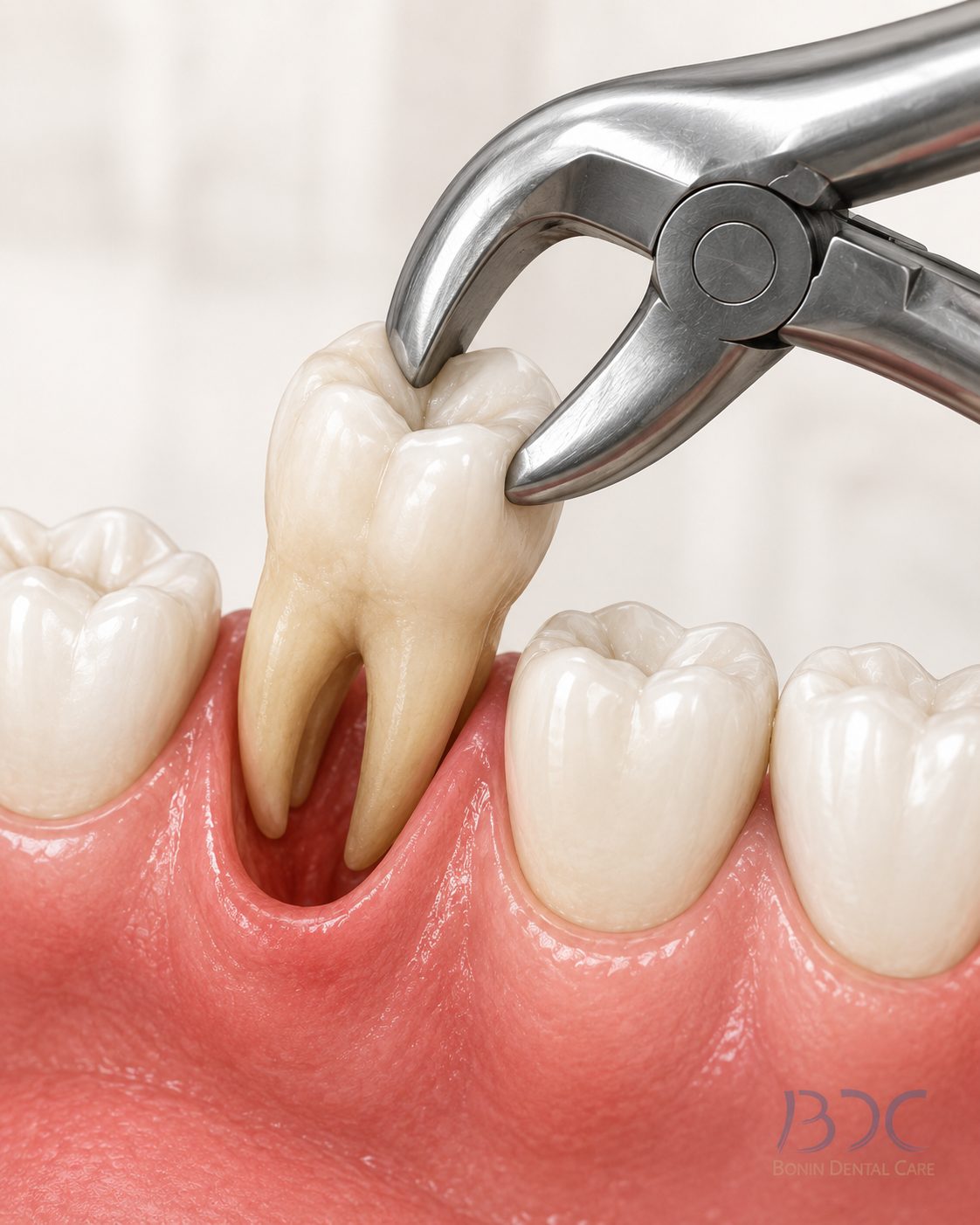
For simple extractions, he loosens the tooth with a dental elevator, rocks it gently to break the attachment, then lifts it out with forceps.
- 4
If a tooth turns out to need surgical removal (impacted, broken below the gum line, or multi-rooted), he stops and refers you to a trusted oral surgeon rather than forcing a complex extraction in a general-dentistry chair.
- 5
We irrigate the socket with saline to clear debris and inspect for any retained root tips or bone fragments.
- 6
If needed, Dr. Bonin places one or two dissolvable stitches to help the socket close and protect the healing area.
- 7
We pack the socket with gauze, explain your aftercare plan, and give you a take-home healing guide with specific do's and don'ts.
- 8
We schedule a brief follow-up in one week to check healing and discuss your restoration options, implant vs bridge vs monitor.
Know Your Options
How Tooth Extraction Compares To The Alternatives
Extraction Plus Implant vs. Bridge vs. Extraction Alone
An implant is your own artificial tooth root; it integrates into bone over four to six months, then supports a crown. You need good bone density and can't have a heavy smoking habit. A bridge uses neighboring teeth as anchors; it's faster and doesn't require bone, but those teeth stay in the bridge forever. Extraction alone is the most affordable and fastest choice, but it leaves a gap that can shift other teeth over time. Your bite, bone levels, and long-term comfort all matter when deciding which path to take.
After Your Appointment
Recovery And Long-Term Care
For the first 24 hours, bite on gauze for 30 minutes to stop bleeding. Rest at home; avoid strenuous activity for a few days. Don't smoke, use a straw, or rinse vigorously, as these actions can dislodge the blood clot and cause dry socket, which is painful and delays healing. Take over-the-counter pain reliever as directed. Ice your cheek for 15 minutes on, 15 minutes off for the first day to reduce swelling. Eat soft foods, lukewarm or cool. Sleep with your head elevated to manage swelling.
After day three, you can gently rinse with warm salt water after meals. The stitches dissolve in one to two weeks. Swelling and soreness peak around day two or three, then fade steadily. Most people feel mostly normal by day five to seven. From week two onward, you can return to normal eating and exercise. Avoid hard, crunchy, or sticky foods near the extraction site for two to three weeks while bone fills in. Attend your one-week checkup so we can confirm healing. If you see signs of dry socket (intense pain after day two or three), infection (fever, pus, swelling that worsens), or prolonged bleeding, call us immediately.
Before You Decide
Costs, Insurance, And Timing
Extraction cost varies by complexity. A simple, in-office extraction of a small-rooted tooth is less involved (and less costly) than the surgical removal of an impacted wisdom tooth, which an oral surgeon handles. Your insurance may cover a portion; we file claims as a courtesy and can give you an estimate before we start. Some patients use patient financing options to spread the cost. The actual procedure takes one visit; healing takes weeks, but you're not in the office for months.
Timeline is straightforward. You come in, we extract, and you're home the same day. Soft tissue heals in two to four weeks; bone remodeling continues for up to six months. If you want an implant afterward, we typically wait three to four months for initial bone healing, then your oral surgeon places the implant and we wait another four to six months for integration before Dr. Bonin places the crown. A bridge can be started as soon as the socket is healed enough to take impressions, usually two to three weeks.
FAQ
Tooth Extraction: Common Questions
Will extraction hurt?
What happens to the space left behind?
Can I go back to work the same day?
How long does healing take?
What if I develop a dry socket?
Can I smoke after my extraction?
What's the difference between a simple and surgical extraction?
What if I'm nervous about sedation?
Have a question we did not cover? Reach out to our team.
Helpful Links
Explore related topics
Whether you are evaluating tooth extraction for the first time or planning a comprehensive treatment that combines several procedures, the resources below answer the questions patients in Windsor and across Sonoma County most often ask before booking.
Related Care
About the Practice
Plan Your Visit
Available Across Sonoma County
Tooth Extraction for patients in these areas
Each link below opens a page written for that community, with drive times, local landmarks, and specific answers to the tooth extraction questions we hear most from your area.
- Tooth Extraction for Healdsburg
- Tooth Extraction for Santa Rosa
- Tooth Extraction for Rohnert Park
- Tooth Extraction for Sebastopol
- Tooth Extraction for Cloverdale
- Tooth Extraction for Larkfield-Wikiup
- Tooth Extraction for Mark West Springs
- Tooth Extraction for Fulton
- Tooth Extraction for Forestville
- Tooth Extraction for Petaluma
- Tooth Extraction for Sonoma
- Tooth Extraction for Oakmont
- Tooth Extraction for Cotati
- Tooth Extraction for Guerneville
- Tooth Extraction for Geyserville
- Tooth Extraction for Fountaingrove
- Tooth Extraction for Rincon Valley
Related Services
Explore related care
General Dentistry
Comprehensive exams, professional assessments, and preventive strategies designed to catch problems early and keep your smile healthy.
Learn moreTooth-Colored Fillings
Tooth-colored composite fillings restore decayed teeth with materials that match your natural smile and bond to tooth structure.
Learn more