Restorative Dentistry
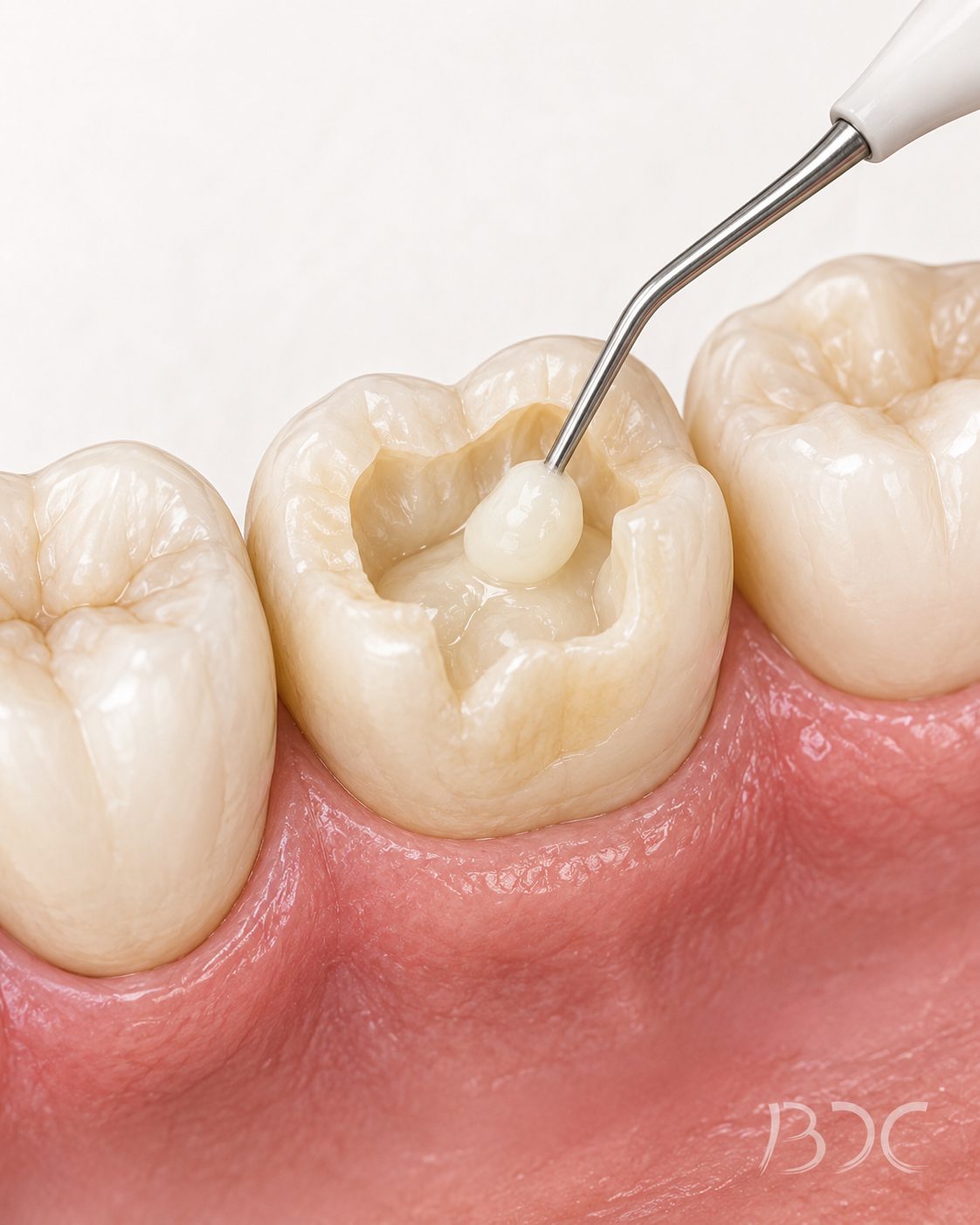
Comprehensive restorative dentistry rebuilds multiple teeth using crowns, bridges, fillings, implants, and strategic planning.
About This Service
Restorative dentistry is the art of rebuilding teeth and bites that have broken down. It's different from cosmetic dentistry, though results are often beautiful. When you have eight failing teeth scattered across your mouth, or a bite that's collapsed from years of decay and wear, restoration is about returning function first, appearance second. It's about making a systematic plan, understanding the sequence of treatment, and knowing which tooth needs attention in which order to build a stable foundation.
Full-mouth restoration begins with diagnosis. We take X-rays, photographs, and sometimes models of your bite to understand what's broken, what's at risk, and what's salvageable. We may discover that a seemingly innocent loose tooth is actually part of a larger problem: surrounding bone loss, bite collapse, hidden decay. Once we understand the full picture, we sit down and map out a treatment plan. Some patients need all treatment done quickly. Others prefer to phase it over a year or two, addressing the most critical teeth first, then rebuilding section by section.
At Bonin Dental Care, restorative cases are our bread and butter. Dr. Bonin has spent two decades handling mouths where every tooth needs work. He knows how to sequence treatments so early restorations support later ones, how to preserve natural teeth when it makes sense, and when extraction is the kindest option. He works with our in-house team to ensure every phase of your reconstruction is stable before moving forward.
Is This Right For You?
Who Benefits Most From Restorative Dentistry
You're an ideal candidate for comprehensive restorative dentistry if you have multiple failing teeth, advanced decay, a collapsed or unbalanced bite, or a history of neglect followed by a desire to get your mouth healthy. You might be someone who avoided the dentist for years due to fear or cost, or someone whose teeth have simply worn out from grinding or acid exposure. Restorative patients include people in their 50s and 60s who are ready to invest in their health, and younger patients with early-stage decay throughout their mouth.
You must be ready to commit to a plan. Restorative cases aren't one-visit fixes; they take time and often budget. You need realistic expectations: we're rebuilding what you have, not creating a perfect cosmetic smile from nothing. You should be willing to improve your home care (brushing, flossing, limiting sugar) so the restorations we place don't fail the way your natural teeth did.
Our Approach
Why Patients Choose Bonin Dental Care For Restorative Dentistry
Dr. Bonin spent two decades in the trenches of restorative dentistry. His Navy residency, combined with his ongoing training at Spear Education, equipped him to handle complex cases where one bad tooth creates a ripple effect across the whole mouth. He approaches each restorative case with a strategic mindset: he doesn't just fix the tooth in front of him; he diagnoses the pattern and creates a plan.
His philosophy is conservative when it matters. He preserves natural tooth structure wherever he can. He extracts teeth only when they're truly hopeless because he understands that even a damaged natural tooth is usually worth saving if there's bone support and a functional future. He combines different restorations (fillings, crowns, bridges, implants) strategically so they reinforce each other and create stability.
At Bonin Dental Care, restorative cases get time and attention. We don't rush. A comprehensive plan is written down, reviewed with you in detail, and explained in plain language. We sequence treatments so you see improvement phase by phase. We manage cost through phased treatment and transparent estimates. And we follow up meticulously, adjusting the plan if something doesn't heal the way we expected or if your priorities shift. Restorative patients often tell us they feel like partners in their own care, not passengers.
Patient Benefits
Why patients choose us for restorative dentistry
- Restores your ability to chew on both sides and eat foods you've been avoiding.
- Stops the cascade of problems that happens when teeth fail; one broken tooth often leads to others.
- Creates a stable bite that protects your jaw joints and prevents future damage.
- Eliminates chronic pain, sensitivity, and discomfort from broken or decayed teeth.
- Returns confidence in your appearance; you smile freely without self-consciousness.
- Provides a long-term plan instead of reactive dentistry, so you know exactly what's coming.
What to Expect
From First Visit To Final Result
Your comprehensive exam is relaxed but thorough. Dr. Bonin spends time understanding your dental history, what bothers you most, and what your goals are. He takes full X-rays and photographs. He may take impressions or digital scans. The appointment lasts 60 to 90 minutes. He doesn't diagnose or plan treatment in this visit; he gathers information.
At your second appointment (the planning appointment), Dr. Bonin sits down with you and presents a written treatment plan. He shows X-rays highlighting problem areas. He explains which teeth are strong, which are weak, which can be saved, and which should come out. He sequences the plan into phases, usually starting with extractions and urgent treatment (root canals, pain relief), then moving to major restorations (crowns, bridges, implants), and finally to refinement and cosmetics.
Treatment itself varies depending on what's in each phase. Early phases might include extractions, temporary restorations, and foundational work that's not always pretty but creates stability. Later phases add cosmetic crowns, bite refinement, and final touches. Throughout, you're supported with temporary solutions so you don't live with gaps or missing teeth between phases. Timeline depends on complexity but typically ranges from three months to two years for a full reconstruction.
What to Expect
Our Approach
Every visit follows a clear, considered sequence. No surprises, no guesswork.
- 1
Your first appointment includes a comprehensive exam, full-mouth X-rays, photographs, and discussion of your dental history and goals.
- 2
Dr. Bonin identifies which teeth are salvageable (with crowns, fillings, or root canals) and which should be extracted.
- 3
He may take impressions or digital scans to create a model of your bite and help plan the sequence of restorations.
- 4
You meet with Dr. Bonin and our team to review the written treatment plan, including timeline, cost breakdown, and which teeth are addressed in which phase.
- 5
Phase one typically addresses the most compromised or painful teeth first; this might include extractions, root canals, and placement of preliminary crowns or fillings.
- 6
Once phase one stabilizes your bite and function, phase two addresses remaining teeth, taking into account how your bite has changed and what's now possible.
- 7
Ongoing phases may include cosmetic refinement, bite balancing, and final restorations as your mouth rebuilds and settles.
- 8
Throughout, we monitor healing, adjust as needed, and keep you informed. Restorative cases often evolve slightly as we learn more about what works.
After Your Appointment
Recovery And Long-Term Care
Aftercare during restorative treatment requires strict attention to home care. Brush twice daily with a soft toothbrush, floss daily, and avoid hard, sticky, or sugary foods. If you've had a history of decay, your mouth is at higher risk; staying disciplined with hygiene matters enormously. We may recommend fluoride rinse or prescription toothpaste to strengthen remaining teeth.
After your restorations are complete, your long-term success depends on maintenance. Attend every six-month cleaning and checkup. We monitor the margins of crowns, the gums around implants, and the stability of your bite. If you have grinding or clenching, wear your nightguard without fail; it protects years of restorative work. Avoid chewing on hard objects, using your teeth as tools, or eating habits that destroy restorations. Some patients revert to poor habits and lose their reconstructed mouth; the ones who maintain their restorations enjoy them for a lifetime.
Before You Decide
Costs, Insurance, And Timing
Cost for full-mouth restorative dentistry varies wildly depending on how many teeth need work, what materials you choose, and whether implants are involved. A case with eight failing teeth might range from moderate to substantial investment. We break costs into phases so you understand what each phase costs before committing. Insurance covers portions of most restorative work. Most plans cover crowns, fillings, and extractions; some cover implants partially. We'll help you maximize your insurance benefits. Patient financing options can spread payments over months.
Timeline depends on complexity. Simple restorative cases (four to six teeth) might be finished in two to three months. Complex cases (eight-plus teeth, multiple implants, bite reconstruction) take six months to two years. We phase treatment so you see progress; early phases address the most critical problems and return function. Later phases refine cosmetics and settle your bite. Healing between phases matters; bone needs time to stabilize before we place crowns, and implants need months to integrate before we crown them.
FAQ
Restorative Dentistry: Common Questions
Do I have to do all my treatment at once?
How do I know if a tooth can be saved or if it should come out?
What's the difference between restorative and cosmetic dentistry?
Will I be without teeth during treatment?
How long do restorations last once they're finished?
What if I can't afford everything right now?
Can I choose not to extract a tooth and just live with a gap?
Will my mouth feel weird after all these restorations?
Have a question we did not cover? Reach out to our team.
Helpful Links
Explore related topics
Whether you are evaluating restorative dentistry for the first time or planning a comprehensive treatment that combines several procedures, the resources below answer the questions patients in Windsor and across Sonoma County most often ask before booking.
Related Care
About the Practice
Plan Your Visit
Related Services
Explore related care
Dental Crowns
A crown is a custom-made restoration that fully covers a weakened or broken tooth, restoring strength, appearance, and function. Includes implant-supported crowns coordinated with our surgical partners.
Learn moreDental Bridges
A dental bridge replaces one or more missing teeth by anchoring a custom restoration to neighboring teeth.
Learn more