Gum Disease Treatment
Non-surgical and laser gum disease treatment to stop progression and restore periodontal health. Scaling, root planing, and maintenance.
About This Service
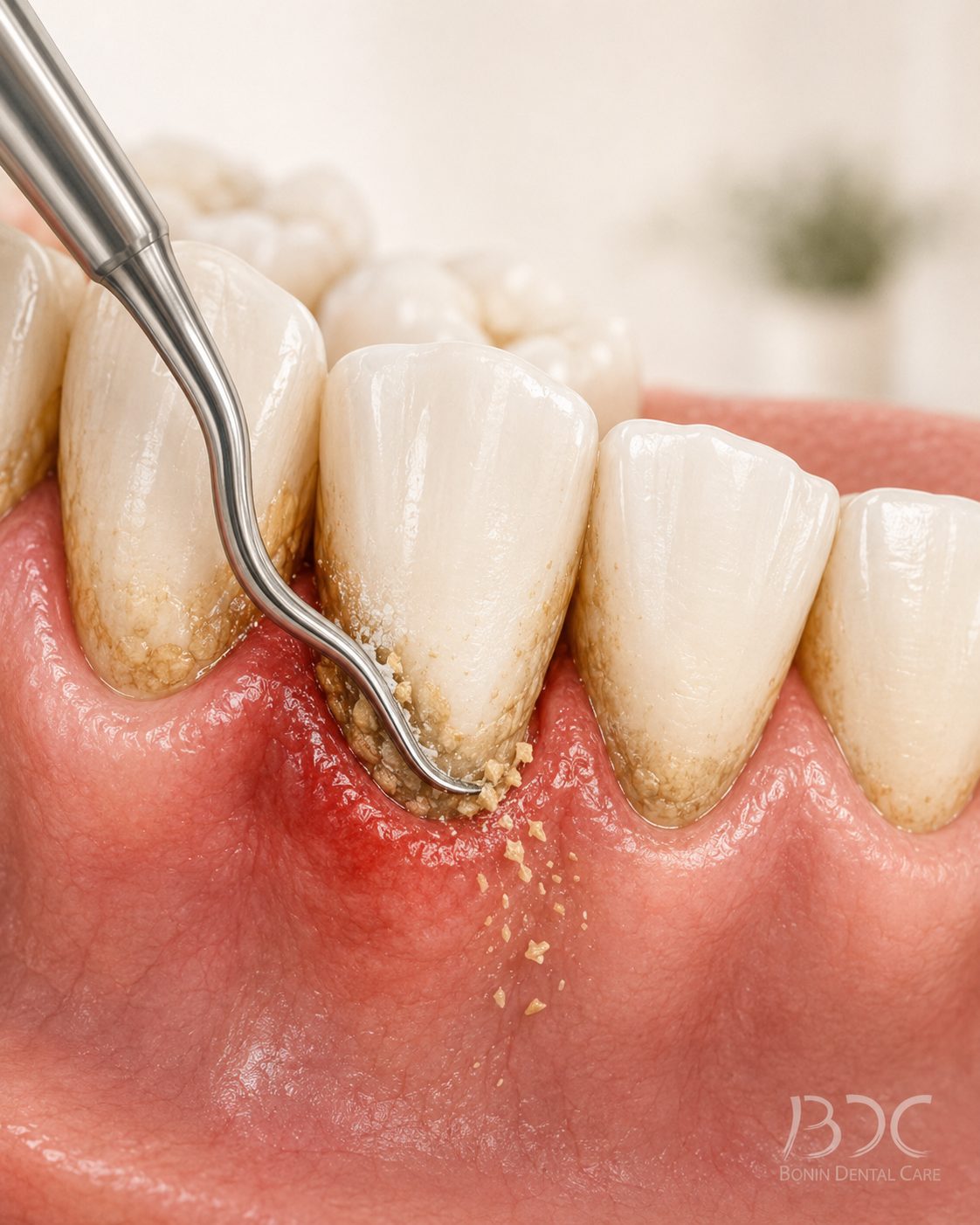
Your gums are the foundation of your smile. They protect the bone and roots of your teeth, and when they become inflamed or diseased, everything else is at risk. Gum disease starts with inflammation (gingivitis) that you might notice as bleeding when you brush or floss, or mild swelling. If you ignore it, it progresses to periodontitis, where the infection spreads below the gum line, bone starts to recede, and teeth become loose.
Many people don't realize they have gum disease until they're at their dental visit and we tell them. You can have moderate to severe periodontitis without obvious symptoms. Your gum might look a bit puffy, or you might notice they feel tender, but you could go years without noticing that your teeth are drifting or becoming loose. By the time things are obvious, we're already looking at bone loss that's hard to reverse.
The good news is that gum disease in its early and moderate stages responds well to treatment. Scaling and root planing (deep cleaning below the gum line) removes the calculus and bacteria that drive infection. Combined with improved home care and regular maintenance visits, this stops the disease progression. Some patients also benefit from laser therapy, which reduces inflammation and bacterial load. At Bonin Dental Care, we catch and treat gum disease early when it's most treatable.
Is This Right For You?
Who Benefits Most From Gum Disease Treatment
You're a candidate for gum disease treatment if your gums bleed when you brush or floss, you have visible swelling or redness, you notice your teeth feel loose or are starting to shift, or your dentist has told you that you have pockets below the gum line. Gum disease is common; it affects roughly half of American adults to some degree. Risk factors include smoking, diabetes, stress, certain medications, genetic predisposition, and poor oral hygiene. Even people who brush and floss can develop gum disease if they're predisposed or if they have other risk factors.
You may not be a candidate for conservative scaling and root planing if your periodontitis is very advanced, with severe bone loss and tooth mobility that suggests teeth are beyond saving. In those cases, referral to a periodontist specialist for more advanced therapy or extraction planning might be necessary. We assess your individual situation and recommend the right level of care.
Our Approach
Why Patients Choose Bonin Dental Care For Gum Disease Treatment
Dr. Bonin has trained extensively in periodontal evaluation and treatment as part of his comprehensive dental education and his U.S. Navy General Practice Residency. Periodontitis is a serious condition that many general dentists refer out to specialists immediately, but we manage early to moderate periodontitis in-house. We catch it early through meticulous exam and X-ray protocols, and we treat it aggressively.
Our hygiene team is experienced in performing thorough, effective scaling and root planing. We don't rush the process; depending on the extent of disease, we take the time needed to do the job properly. Some practices do scaling and root planing in one visit; we often prefer multiple visits so we can work thoroughly without cramping or causing unnecessary trauma to your gums. We also have laser therapy available, which we use selectively to reduce inflammation and bacterial load in targeted areas.
What sets us apart in Windsor and Sonoma County is our commitment to prevention and maintenance. After we treat your periodontitis, we don't discharge you back to annual cleanings. We see you every 3 months, monitor your pocket depths and bone, and adjust your home care protocol based on your response. Many patients tell us they've never been monitored this closely by a dental practice before, and they appreciate the difference it makes.
Patient Benefits
Why patients choose us for gum disease treatment
- Stops gum disease progression and saves teeth at risk of loss
- Reduces inflammation and bleeding, improving gum appearance and health
- Eliminates pockets of infection below the gum line through deep cleaning
- Restores ability to clean your teeth effectively at home without damage to fragile gums
- Prevents bone loss and tooth migration that come with untreated periodontitis
- Maintenance visits protect your investment and catch flare-ups early
What to Expect
From First Visit To Final Result
Your first visit is a thorough periodontal evaluation. Dr. Bonin or our hygienist will use a small probe to measure the depth of your gum pockets (the spaces between your tooth and gum). Healthy pockets are 1 to 3 millimeters; deeper pockets indicate gum disease. We also look at your X-rays to assess bone levels, take photographs to document your baseline, and discuss what we see with you. This appointment might take 30 to 45 minutes because we're gathering detailed information.
During scaling and root planing, you'll be numbed with local anesthetic so the procedure is comfortable. We remove calculus and bacteria from above and below the gum line, and we smooth the root surface so your gum tissue can reattach. You might hear scraping sounds and feel some vibration, but you shouldn't feel sharp pain. Depending on extent, this might be done in one appointment or multiple. We'll discuss timing when we present the treatment plan.
After the procedure, your gums will feel tender and may bleed slightly when you brush for a few days. This is normal. We'll give you specific instructions on gentle care during healing.
What to Expect
Our Approach
Every visit follows a clear, considered sequence. No surprises, no guesswork.
- 1
Dr. Bonin or our hygienist performs a comprehensive periodontal exam, measuring gum pockets and assessing bone loss with probe measurements and X-rays.
- 2
We discuss the severity of your gum disease (gingivitis, early, moderate, or advanced periodontitis) and explain what's driving it in your mouth.
- 3
If gum disease is present, we outline treatment: typically scaling and root planing (deep cleaning), possible laser therapy, and a maintenance schedule.
- 4
Scaling and root planing involves removing calculus and plaque from above and below the gum line and smoothing the root surface so gums can reattach.
- 5
The procedure may be done in one visit or multiple visits depending on extent; some patients return for follow-up visits to address different areas.
- 6
Laser therapy may be used to reduce bacterial load and inflammation if indicated for your case.
- 7
After initial treatment, we schedule regular maintenance visits (typically every 3 months) to monitor healing and prevent recurrence.
- 8
We teach you home care techniques specific to your situation so you can support healing and prevent the disease from coming back.
After Your Appointment
Recovery And Long-Term Care
In the first 24 to 48 hours after scaling and root planing, avoid very hot foods and drinks, don't smoke (if you do smoke, this is an excellent time to quit), and use a soft-bristled toothbrush. Your gums will be tender and may bleed slightly when you brush; this gradually improves as they heal. Saltwater rinses (1/2 teaspoon salt in 8 ounces warm water) several times a day for a few days help with comfort and healing. Ibuprofen can help with any soreness.
Most people can return to normal eating within a few days, though softer foods are more comfortable initially. Don't floss aggressively for the first week; gentle flossing resumes as soreness decreases. Many patients see improvement in bleeding and swelling within 1 to 2 weeks. However, full healing and gum reattachment takes several weeks, and we won't know the full extent of improvement until 4 to 6 weeks post-treatment.
Long-term, your success depends on consistent home care and your maintenance visit schedule. We typically see you every 3 months after treatment, not the standard once-yearly cleaning. These visits monitor your healing and keep your disease under control. If you smoke, quit or reduce significantly; smoking is the biggest obstacle to gum disease treatment success.
Before You Decide
Costs, Insurance, And Timing
Cost depends on the extent of your gum disease and whether the treatment is a localized area or full-mouth scaling and root planing. More advanced disease requires more time and visits. Most dental insurance plans cover periodontal therapy as a major service at 50 percent. Some plans have limitations on frequency (e.g., they won't cover more than two scalings per year) or require a higher deductible for periodontal treatment. We'll verify your coverage and provide an estimate before we begin. If cost is a barrier, patient financing options may be available.
Treatment timeline varies. If you have mild gum disease, scaling and root planing might be completed in one or two visits over a few weeks. If you have moderate to advanced disease, we may stage treatment and allow healing between visits, stretching the initial phase over 6 to 8 weeks. After the active treatment phase, the real commitment begins: your 3-month maintenance visits. These ongoing visits are essential to keeping the disease controlled. Some patients graduate to every 4 months or standard cleanings once their disease is well-controlled, but many need ongoing periodontal maintenance indefinitely to prevent recurrence.
FAQ
Gum Disease Treatment: Common Questions
Can gum disease be cured?
Does scaling and root planing hurt?
Why do I need more frequent cleanings after treatment?
What's the difference between a regular cleaning and scaling and root planing?
I smoke. Can I still get gum disease treatment?
Can I prevent gum disease?
What happens if I don't treat gum disease?
Will my teeth grow back the bone I've lost?
Have a question we did not cover? Reach out to our team.
Helpful Links
Explore related topics
Whether you are evaluating gum disease treatment for the first time or planning a comprehensive treatment that combines several procedures, the resources below answer the questions patients in Windsor and across Sonoma County most often ask before booking.
Related Care
About the Practice
Plan Your Visit
Available Across Sonoma County
Gum Disease Treatment for patients in these areas
Each link below opens a page written for that community, with drive times, local landmarks, and specific answers to the gum disease treatment questions we hear most from your area.
- Gum Disease Treatment for Healdsburg
- Gum Disease Treatment for Santa Rosa
- Gum Disease Treatment for Rohnert Park
- Gum Disease Treatment for Sebastopol
- Gum Disease Treatment for Cloverdale
- Gum Disease Treatment for Larkfield-Wikiup
- Gum Disease Treatment for Mark West Springs
- Gum Disease Treatment for Fulton
- Gum Disease Treatment for Forestville
- Gum Disease Treatment for Petaluma
- Gum Disease Treatment for Sonoma
- Gum Disease Treatment for Oakmont
- Gum Disease Treatment for Cotati
- Gum Disease Treatment for Guerneville
- Gum Disease Treatment for Geyserville
- Gum Disease Treatment for Fountaingrove
- Gum Disease Treatment for Rincon Valley
Related Services
Explore related care
General Dentistry
Comprehensive exams, professional assessments, and preventive strategies designed to catch problems early and keep your smile healthy.
Learn moreTooth-Colored Fillings
Tooth-colored composite fillings restore decayed teeth with materials that match your natural smile and bond to tooth structure.
Learn more