Dental Bridges for Petaluma Patients
Bridges replace missing teeth without implants by anchoring to adjacent teeth.
Dental Bridges for Petaluma
Why Petaluma patients choose Bonin Dental Care
When you're missing a tooth, a bridge offers a fixed restoration that stays in place, unlike a removable partial denture. A bridge uses your natural teeth on either side of the gap as anchors, bridging the space with a prosthetic tooth. Dr. Scott Bonin designs bridges to match your natural teeth and bite. Bridges have been used successfully for decades and continue to be a viable option when implants aren't indicated or when you prefer a fixed restoration that doesn't require bone surgery. Modern bridge materials (zirconia, porcelain-fused-to-metal) are durable and esthetic, lasting 10 to 15 years typically.
Some Petaluma residents have missing teeth but prefer bridges over implants due to cost, bone quality, or personal choice. Bridges require minimal surgery and no implant osseointegration timeline. For some patients, a bridge is the right choice. Dr. Bonin assesses your specific anatomy and preferences to recommend the best solution.
Bridge design requires understanding your bite and adjacent tooth anatomy. Dr. Bonin ensures the bridge restoration preserves function and esthetics. He coordinates with a quality laboratory for bridge fabrication. That attention results in a bridge that fits, feels, and looks natural.
Concerns we hear most from Petaluma
Petaluma patients ask whether bridges are as good as implants (they're excellent alternatives, though implants are tooth-independent). They worry about whether adjacent teeth need crowns (they typically do for bridge anchors). They ask about longevity and maintenance. Here's the reality: bridges are reliable, fixed restorations that work well for many patients. Maintenance is straightforward: careful flossing under the bridge and regular cleanings.
Neighborhood & Travel
Getting to us from Petaluma
Bridge patients in Petaluma include those with missing single teeth or short edentulous spans, older residents who prefer bridges over implants, and patients whose bone anatomy isn't ideal for implants.
Our Windsor office is about 32 minutes north on 101. Bridge treatment requires preparation appointments and then a delivery appointment after the bridge is fabricated. Total treatment time is two to three weeks typically. Parking is free.
Clinical Depth
How Dr. Bonin approaches Dental Bridges
Bridge fabrication begins with preparation of the anchor teeth. Dr. Bonin removes any decay, old fillings, or defects and reshapes the teeth to support the bridge crown structures. Digital impressions capture the prepared anchor teeth, the gap between them, and your bite.
Dr. Bonin designs the bridge restoration, specifying the materials (zirconia or porcelain-fused-to-metal), the shape of the artificial tooth (pontic), and the width of the crowns that will sit on the anchor teeth. The bridge is fabricated in a laboratory, with the two anchor crowns flanking a pontic (the artificial tooth) connecting them.
At delivery, Dr. Bonin tries the bridge in, checks fit and bite contacts, and adjusts as needed. The bridge is then cemented permanently, connecting the two anchor teeth and spanning the gap with a fixed tooth replacement.
Why This Matters Locally
Fit for Petaluma lifestyle
Petaluma residents with bridge restorations benefit from a fixed restoration that feels and functions like natural teeth. No removable appliance, no implant surgery, just a reliable restoration that lets you live your life.
About This Service
Dental Bridges
A dental bridge is a fixed restoration that spans a gap left by one or more missing teeth. It's called a bridge because it literally bridges the space, held in place by crowns on the neighboring teeth (called abutment teeth). Unlike a removable partial denture, a bridge is cemented in permanently, so it feels like your own teeth. You brush and floss around it, you eat normally, and your speech doesn't change. A bridge restores your ability to chew properly, which matters more than people realize. When you're missing a tooth, you naturally shift your chewing to the other side, overloading those teeth and unbalancing your jaw. A bridge puts your bite back in symmetry. It also stops the slow drift of neighboring teeth into the empty space, which can wreck your alignment over years. And it fills the visible gap so your smile looks complete. At Bonin Dental Care, we place several kinds of bridges depending on your anatomy. A traditional bridge requires preparing two teeth (one on each side of the gap). A cantilever bridge works when there's only one stable tooth next to the gap. A Maryland bonded bridge preserves more tooth structure by bonding to the back of abutment teeth rather than covering them with full crowns. Dr. Bonin examines your teeth and explains which option makes sense for your situation, focusing on what's best for the long term, not just the short-term budget.
Common Questions
Dental Bridges in Petaluma: FAQ
How many teeth can a bridge span?
Do my anchor teeth need to be crowned?
How long does a bridge last?
Is a bridge more difficult to clean than natural teeth?
What if an anchor tooth decays under the bridge?
Have a question we did not cover? Reach out to our team.
Keep Exploring
Related pages for Petaluma and Dental Bridges
More services for Petaluma patients
Written specifically for your community, not a general page.
- Dental Implant Restoration (Surgical Care Coordinated with Specialists) for Petaluma
- Full-Arch Dental Implants (All-on-4 / All-on-X, Coordinated with Specialists) for Petaluma
- Invisalign Clear Aligners for Petaluma
- Porcelain Veneers for Petaluma
- Cosmetic Dentistry & Smile Design for Petaluma
- Emergency Dentistry for Petaluma
- Sedation & Anxiety Dentistry for Petaluma
- Tooth-Colored Fillings for Petaluma
Dental Bridges in other nearby areas
Recommend us to friends or family in these Sonoma County communities.
- Dental Bridges for Healdsburg
- Dental Bridges for Santa Rosa
- Dental Bridges for Rohnert Park
- Dental Bridges for Sebastopol
- Dental Bridges for Cloverdale
- Dental Bridges for Larkfield-Wikiup
- Dental Bridges for Mark West Springs
- Dental Bridges for Fulton
Find Us
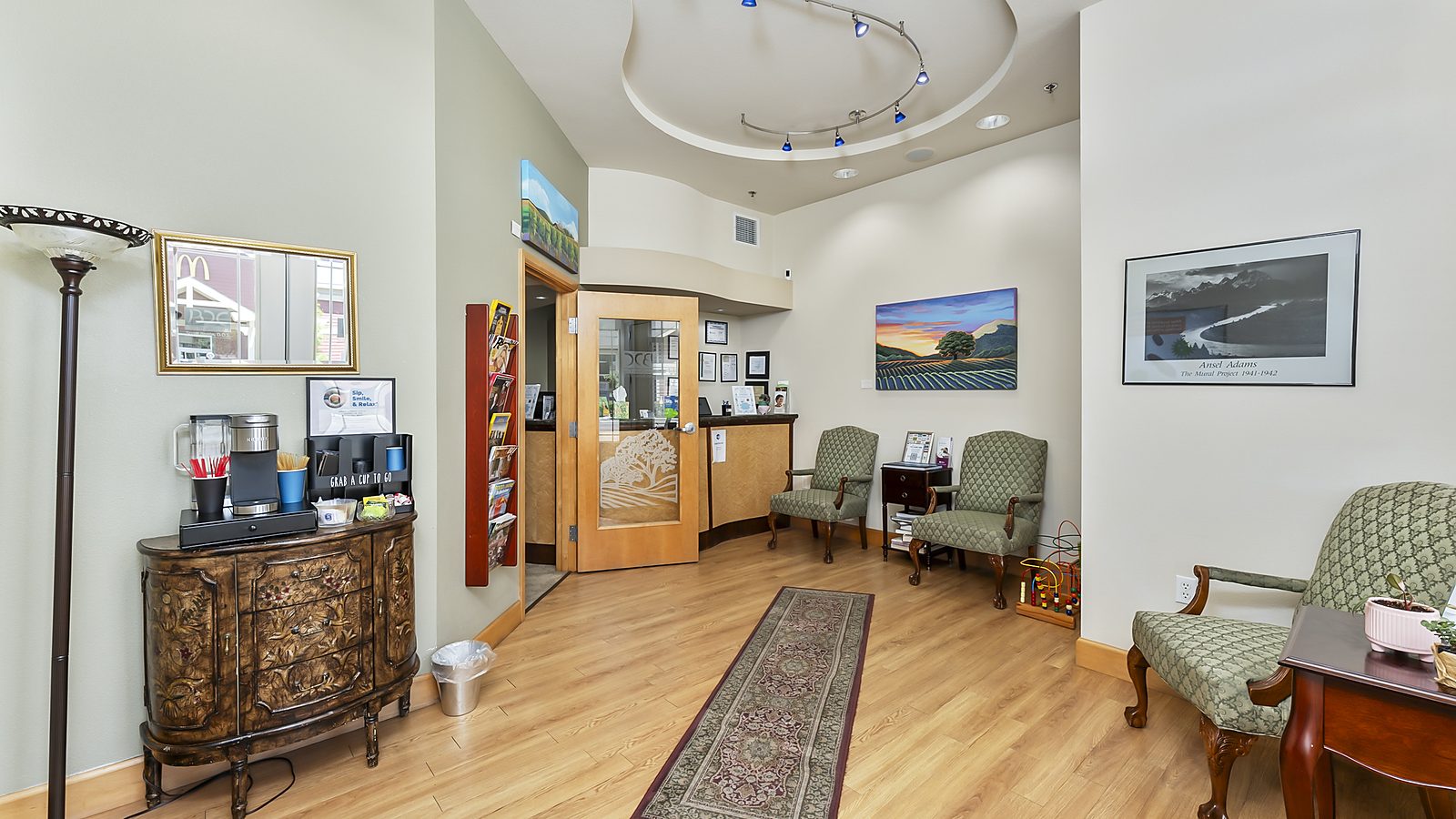
Visit Our Windsor Office
Office Hours
- Mon
- 8 AM to 5 PM
- Tue
- 8 AM to 5 PM
- Wed
- 8 AM to 5 PM
- Thu Today
- 8 AM to 5 PM
- Fri
- Closed
- Sat
- Closed
- Sun
- Closed