
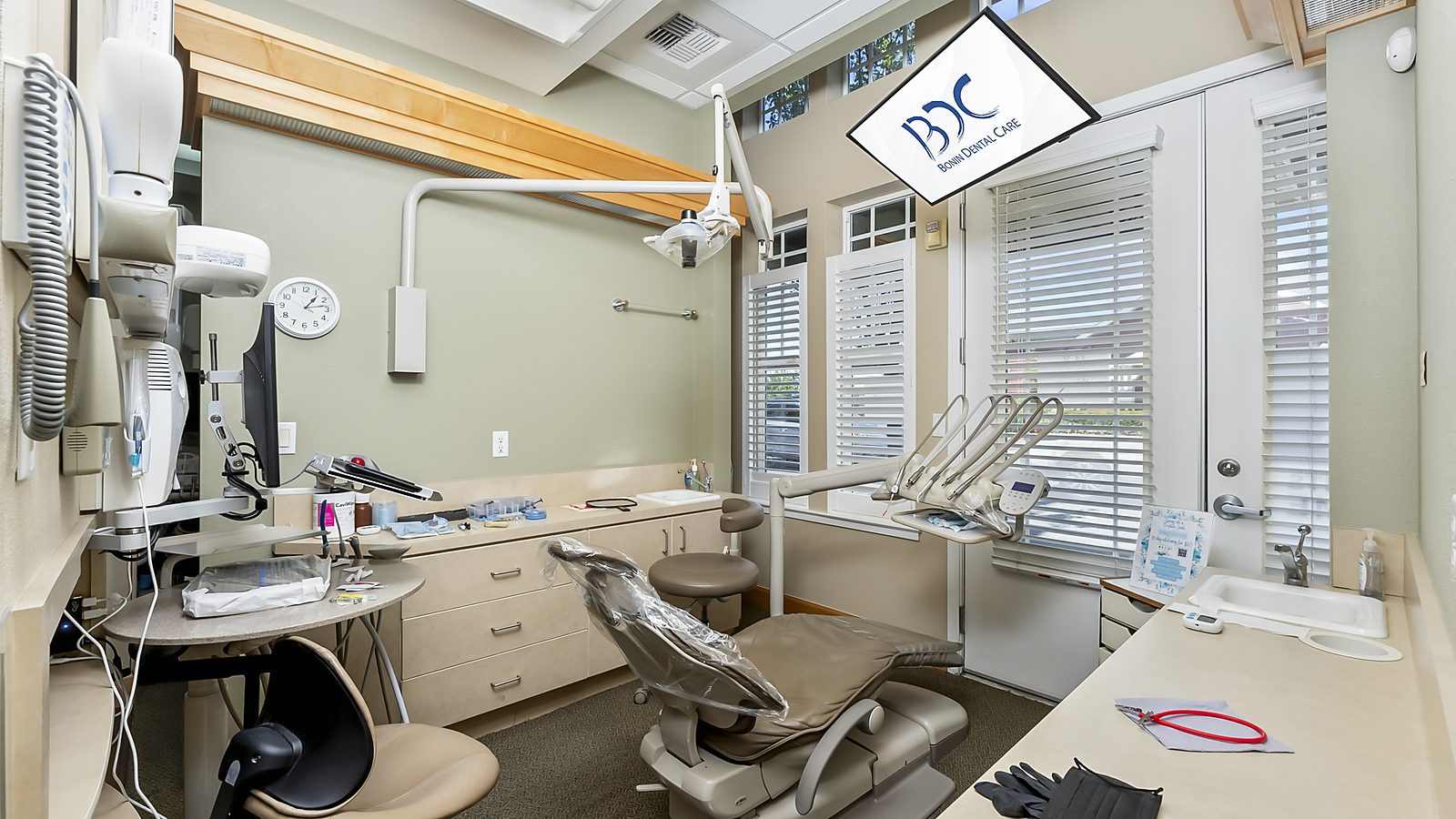
TMJ Treatment for Petaluma Patients
Jaw pain, clenching, and TMJ dysfunction often respond to conservative therapy.
TMJ Treatment for Petaluma
Why Petaluma patients choose Bonin Dental Care
TMJ (temporomandibular joint) disorder affects roughly one in four people. You might experience jaw pain, clicking or popping, difficulty opening wide, or chronic tension headaches from clenching at night. Many Petaluma residents assume they need surgery or are stuck with the problem forever. In reality, conservative therapy resolves most TMJ issues. Dr. Scott Bonin begins with a detailed evaluation of your bite, jaw muscle tension, and symptom patterns. Based on findings, he may recommend a custom night guard to reduce clenching pressure, bite adjustment to improve occlusal harmony, postural coaching, or stress management strategies. Most patients improve significantly without invasive treatment.
Petaluma's fast-paced professional culture, with remote workers juggling multiple projects and commuters dealing with traffic stress, creates epidemic levels of clenching and jaw tension. The wine-country lifestyle offers good stress outlets like outdoor recreation and community events, but many residents still clench their teeth at night. A custom night guard addresses the symptom and prevents tooth wear and joint damage. Dr. Bonin's approach is pragmatic: address what we can control through conservative care first.
Many dentists recognize TMJ dysfunction but lack expertise in managing it. Dr. Bonin has extensive training in occlusal therapy (optimizing bite function) and TMJ biomechanics. He takes time to listen to your symptoms, palpates your jaw muscles, assesses your bite, and develops a personalized treatment plan. His thoughtful approach often resolves issues that have troubled patients for years.
Concerns we hear most from Petaluma
Petaluma patients ask whether TMJ problems are permanent, whether they'll need surgery, and whether a night guard actually works. They wonder whether headaches are really coming from their jaw. They worry that TMJ means they'll never eat chewy foods again. Here's the reality: most TMJ dysfunction is reversible with conservative care. Surgery is rarely necessary. Night guards are highly effective for clenchers. Headaches often have a jaw component that remains undiagnosed. Your dietary restrictions are usually temporary.
Neighborhood & Travel
Getting to us from Petaluma
TMJ patients in Petaluma include stressed professionals from East Petaluma tech jobs, busy parents managing multiple roles, and older residents experiencing age-related muscle tension. We see residents from all neighborhoods with similar complaints: night clenching, morning jaw stiffness, and occasional clicking.
Our Windsor office is about 32 minutes north on 101. TMJ consultation includes a detailed examination and discussion of your symptoms and lifestyle. A night guard is fabricated to your unique bite and typically ready within one to two weeks. You'll have a brief follow-up appointment to adjust the guard and ensure comfort. Parking is free.
Clinical Depth
How Dr. Bonin approaches TMJ Treatment
TMJ evaluation includes visual assessment of your jaw opening (normal is 35 to 40 millimeters), palpation of your jaw muscles to detect tension or trigger points, assessment of bite contacts using articulating paper, and discussion of your symptoms and stress levels. Dr. Bonin may take imaging (X-rays or CBCT) if he suspects joint pathology.
If clenching is the primary issue, a custom night guard is fabricated from an impression of your teeth. The guard is made from hard acrylic on the biting surface and soft acrylic against the gum, providing stability and cushioning. Dr. Bonin adjusts the contacts to ensure balanced force distribution and comfortable fit.
Bite adjustment involves selectively grinding your natural teeth to eliminate deflective contacts that create imbalanced forces during closure. This is performed conservatively, removing only high points.
Muscle tension often responds to postural awareness (keeping your jaw relaxed, not clenching), stress management, and sometimes physical therapy directed at jaw muscles and cervical spine.
Why This Matters Locally
Fit for Petaluma lifestyle
Petaluma's outdoor culture, wine country recreation, and active community offer natural stress relief. Pairing that lifestyle with conservative TMJ management means most residents resolve their symptoms and move on with confidence. You're not limited to soft foods or expensive surgery; you're managing a common condition with practical tools.
About This Service
TMJ Treatment
Your jaw joint works harder than you think. It opens and closes thousands of times a day, handles the stress of chewing, and reacts to tension in your neck, shoulders, and face. When the joint or surrounding muscles get out of balance, the results show up as clicking, popping, pain while eating, or that locked feeling first thing in the morning. Temporomandibular joint disorder (TMJ) isn't always about one single cause. We often see a mix: nighttime grinding or clenching (bruxism), uneven bite pressure, forward head posture from desk work, or stress-related muscle tension. The joint itself may have inflammation, and the muscles around it go into protective spasm. Left unaddressed, these patterns reinforce each other, and what started as occasional discomfort becomes something that affects how you eat, speak, and sleep. At Bonin Dental Care, we start with a thorough evaluation. Dr. Bonin listens to what you're experiencing, examines your bite alignment and jaw movement, and takes imaging if needed to see what's actually happening inside the joint. From there, we build a treatment plan that targets your specific situation, whether that's a custom occlusal splint to wear at night, specific jaw exercises, or lifestyle adjustments. Our goal isn't just to manage symptoms, but to help you get back to function.
Common Questions
TMJ Treatment in Petaluma: FAQ
What causes TMJ disorder?
How does a night guard help TMJ pain?
Can bite adjustment fix TMJ problems?
Is TMJ surgery necessary if conservative treatment doesn't work?
Can stress cause jaw pain?
Have a question we did not cover? Reach out to our team.
Keep Exploring
Related pages for Petaluma and TMJ Treatment
More services for Petaluma patients
Written specifically for your community, not a general page.
- Dental Implant Restoration (Surgical Care Coordinated with Specialists) for Petaluma
- Full-Arch Dental Implants (All-on-4 / All-on-X, Coordinated with Specialists) for Petaluma
- Invisalign Clear Aligners for Petaluma
- Porcelain Veneers for Petaluma
- Cosmetic Dentistry & Smile Design for Petaluma
- Emergency Dentistry for Petaluma
- Sedation & Anxiety Dentistry for Petaluma
- Tooth-Colored Fillings for Petaluma
TMJ Treatment in other nearby areas
Recommend us to friends or family in these Sonoma County communities.
- TMJ Treatment for Healdsburg
- TMJ Treatment for Santa Rosa
- TMJ Treatment for Rohnert Park
- TMJ Treatment for Sebastopol
- TMJ Treatment for Cloverdale
- TMJ Treatment for Larkfield-Wikiup
- TMJ Treatment for Mark West Springs
- TMJ Treatment for Fulton
Find Us
Visit Our Windsor Office
Office Hours
- Mon
- 8 AM to 5 PM
- Tue
- 8 AM to 5 PM
- Wed
- 8 AM to 5 PM
- Thu Today
- 8 AM to 5 PM
- Fri
- Closed
- Sat
- Closed
- Sun
- Closed