Patient Education
Dental ImplantsAm I a Candidate for Dental Implants? Key Factors Your Dentist Evaluates
Bone density, gum health, medical history, and lifestyle all affect implant candidacy. Learn what the evaluation process looks like and who qualifies.
- Dental Implants
- Patient Guide
- Restorative Dentistry
What Makes a Good Implant Candidate
Most people with missing teeth are candidates for dental implants. Implants have become increasingly accessible as techniques have improved, and more patients can receive them even if they wouldn’t have qualified 10 or 15 years ago. That said, certain factors affect your candidacy and the likelihood of successful implant integration.
The key factors are bone density and volume, gum health, overall health, commitment to oral hygiene, and age. Your dentist evaluates all these factors during an implant consultation to determine if you’re a good candidate and if any additional procedures might be needed to prepare you for implants.
Bone Density and Volume
The most critical factor for implant success is having adequate bone density and volume in your jaw. An implant is surgically placed into the bone, and the bone must be healthy and substantial enough to support it. The implant needs to integrate with the bone through a process called osseointegration, where bone grows around and bonds with the implant surface.
If you’ve had a missing tooth for years, bone loss in that area is inevitable. Your jawbone resorbs (shrinks) when it’s not supporting a tooth root. If the bone loss is significant, you might need a bone graft before implant placement.
Your dentist evaluates bone density using X-rays and sometimes CT scans. These imaging studies show the height, width, and density of bone available. If there’s sufficient bone, you can move forward with implant placement. If bone is deficient, your dentist discusses bone grafting options.
Bone grafting takes additional time and cost, but it allows many patients who wouldn’t otherwise be candidates to receive implants. Grafted bone typically integrates within several months, after which an implant can be placed.
Gum Health
Healthy gums are essential for implant success. If you have active gum disease like gingivitis or periodontitis, that must be treated before implant placement. Gum disease is a bacterial infection that compromises the tissues and bone supporting teeth. Placing an implant in the presence of untreated gum disease significantly increases the risk of implant failure.
Your dentist evaluates your gum health and designs a treatment plan if needed. This might include scaling and root planing, more aggressive periodontal therapy, or ongoing management of gum disease. Once your gums are healthy, you’re cleared for implant placement.
After implant placement, maintaining excellent gum health is crucial. Implants don’t develop cavities like natural teeth, but they can develop an infection called peri-implantitis that affects the tissue and bone around the implant. Good oral hygiene and regular professional care prevent this.
Overall Health Status
Certain medical conditions affect implant candidacy. Uncontrolled diabetes significantly impacts bone healing, so if you have diabetes, it needs to be well-managed before implant placement. Once your diabetes is under control, implants are generally safe and successful.
Bone disorders like osteoporosis might affect your candidacy. Your physician and dentist would need to discuss whether implants are appropriate.
Medications that affect bone healing might impact timing or approach. Some bisphosphonate medications used for osteoporosis and cancer treatment can affect bone healing. This doesn’t necessarily eliminate you from implant candidacy, but your dentist needs to know about it and might modify the treatment plan.
Immune system disorders that are well-managed are generally not barriers to implants. A weak immune system that’s uncontrolled increases infection risk, so stability is important.
Cancer treatment and radiation therapy can affect bone healing. If you’ve had radiation to your jaw, implant placement is more complex and might require additional precautions or might not be recommended at all.
Smoking and Lifestyle
Smoking significantly increases implant failure risk. Smoking impairs blood circulation and bone healing, making it harder for bone to integrate around the implant. If you smoke, quitting or at least substantially reducing smoking increases your chances of implant success.
Heavy alcohol consumption affects bone healing similarly to smoking. If you consume significant amounts of alcohol, cutting back improves your implant outcomes.
Excellent oral hygiene is essential. If you don’t brush and floss regularly, your implant is at higher risk. Implants require the same commitment to daily care as natural teeth, if not more.
Clenching or grinding your teeth increases stress on implants. If you have this habit, your dentist might recommend a night guard to protect your implant.
Age Considerations
Most of the population is a candidate for implants regardless of age. However, implants typically aren’t placed in growing children because their jawbones are still developing. Once the jaw is fully developed, usually in the late teens to early 20s, implants can be placed.
Older adults are excellent implant candidates. There’s no upper age limit. As long as you’re healthy enough for dental surgery (which is a minor surgical procedure), age isn’t a barrier.
The Evaluation Process
Your consultation begins with a discussion of your missing teeth and your goals. Your dentist learns about your medical history, medications, and any conditions that might affect implant treatment. Honest discussion of smoking, alcohol use, and oral hygiene habits is important.
Your dentist performs a clinical examination of your mouth, evaluating bone height and width, gum health, and the health of your remaining teeth.
Imaging studies are typically taken. X-rays show bone levels. A CT scan or cone beam computed tomography (CBCT) provides three-dimensional imaging that shows exactly where bone is available and where additional grafting might be needed.
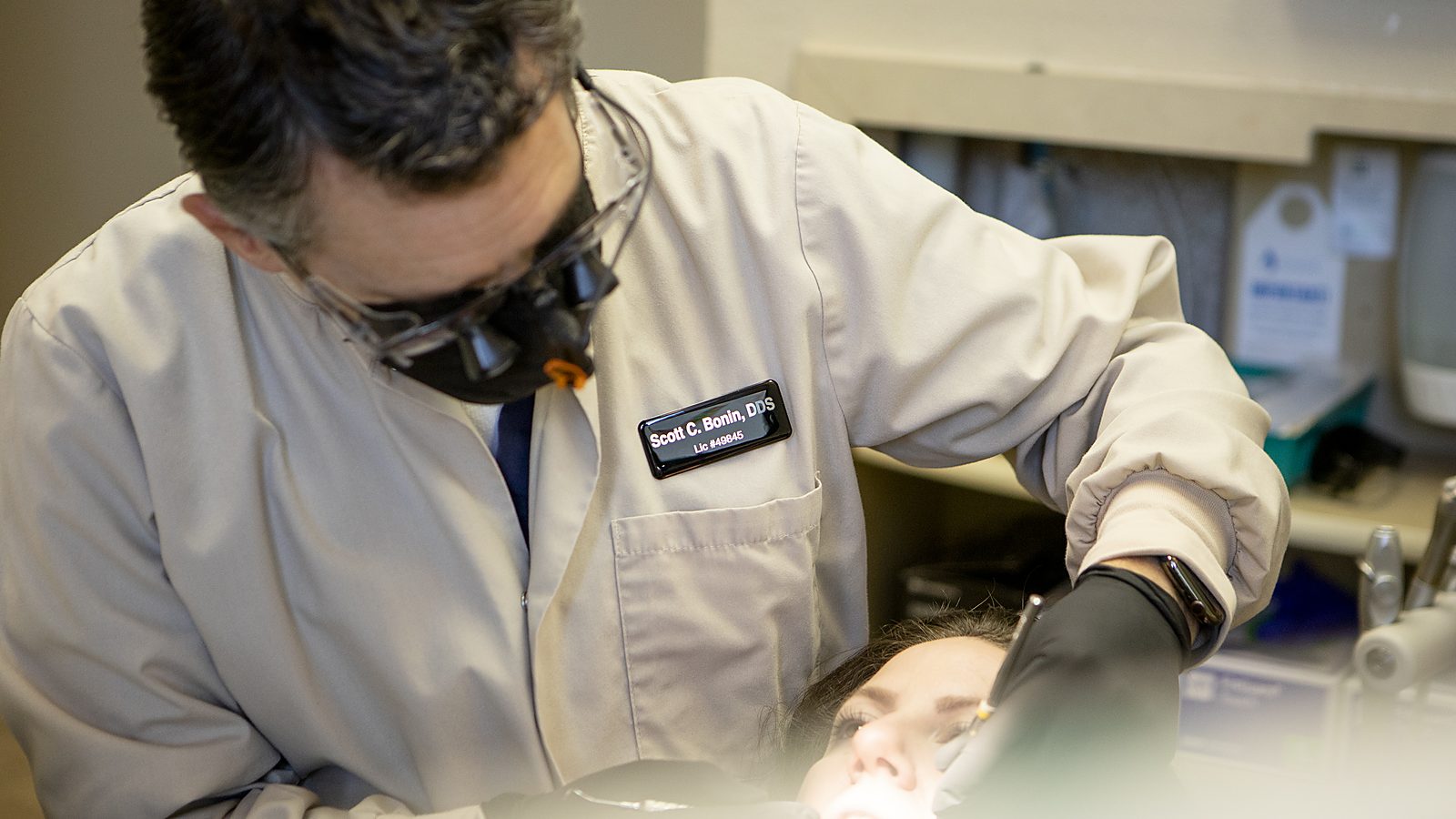
Dr. Bonin discusses what he found and outlines a treatment plan. If implants are appropriate and you have adequate bone, the plan might proceed directly to implant placement. If bone grafting is needed, the plan outlines the grafting procedure and timeline for subsequent implant placement.
Here is how the work is divided. Dr. Bonin is a general dentist. He handles the exam, the imaging, the diagnosis, and the treatment plan, and the implant itself is placed by a trusted oral surgeon or periodontist he refers to. Once the implant has integrated, Dr. Bonin designs and seats the final crown at our Windsor office and manages the long-term maintenance. You get a specialist for the surgical phase and one office quarterbacking the entire case from diagnosis through the final restoration.
When Implants Might Not Be Recommended
Implants might not be recommended if you have severely uncontrolled medical conditions that affect bone healing. However, this is relatively uncommon. Most conditions that seem like barriers can be managed in ways that allow implant placement.
Severe bone loss might make implants impractical if you’re unwilling or unable to have bone grafting. However, options like implant-supported dentures can work even with more limited bone.
If your oral hygiene is very poor and unlikely to improve, your dentist might express concerns about implant success. This isn’t an absolute barrier, but it’s a realistic conversation about the likelihood of long-term success.
Moving Forward
If you’ve lost teeth and you’re considering your options, a consultation with Dr. Bonin at Bonin Dental Care in Windsor gives you clear information about whether you’re a candidate for implants. Even if you have factors like bone loss or gum disease, options exist to prepare you for successful implant placement.
Dental implants are an excellent solution for missing teeth because they restore function, prevent ongoing bone loss, and look completely natural. Dr. Bonin plans the case, coordinates the surgical phase with a trusted Sonoma County surgeon, and restores the implant with the final crown. If you’d like to explore whether implants are right for you, contact us today to schedule a consultation.
Written by
Dr. Scott Bonin, DDSGeneral and cosmetic dentist at Bonin Dental Care in Windsor, California. USC School of Dentistry graduate, Navy veteran, and member of the American Dental Association, California Dental Association, and American Academy of Cosmetic Dentistry. Over 24 years of clinical experience serving Sonoma County families.
View full credentialsClinical note: This article is for educational purposes and does not replace a professional examination. Every patient's situation is unique. If you have questions about your specific dental health, please schedule an appointment or call (707) 838-1400.
Common Questions
Frequently asked questions
- What disqualifies someone from getting dental implants?
- Uncontrolled diabetes, active gum disease, heavy smoking, and insufficient jawbone density can affect candidacy. However, many of these conditions can be managed or treated first, making implants possible for most patients after proper preparation.
- Is there an age limit for dental implants?
- There is no upper age limit. Healthy patients in their 70s and 80s routinely receive implants. The minimum age is typically 18, after the jaw has finished growing.
- How long does the dental implant process take from start to finish?
- Most cases take four to eight months, including healing time. Cases requiring bone grafting may take longer. Dr. Bonin will provide a personalized timeline during your consultation.
- Are dental implants painful?
- Most patients report less discomfort than expected. The procedure is done under local anesthesia, and post-operative pain is typically manageable with over-the-counter medication for a few days.
Related Services
Explore the treatments behind this topic
Ready to talk with Dr. Bonin about what you just read? Here are the procedures at Bonin Dental Care most closely connected to this article. Each page explains how we do the work, what to expect, and how to get started.
-
Restorative
Dental Implant Restoration (Surgical Care Coordinated with Specialists)
Dr. Bonin coordinates the surgical placement of your dental implant with a trusted oral surgeon or periodontist, then designs and seats the custom crown that finishes the case at our Windsor office.
Learn about this service -
Restorative
Restorative Dentistry
Comprehensive restorative dentistry rebuilds multiple teeth using crowns, bridges, fillings, implants, and strategic planning.
Learn about this service -
Restorative
Full-Arch Dental Implants (All-on-4 / All-on-X, Coordinated with Specialists)
Full-arch restoration with All-on-4 or All-on-X implants. The surgical phase is performed by a trusted oral surgeon Dr. Bonin coordinates with, and Dr. Bonin designs and seats the final prosthesis at our Windsor office.
Learn about this service
Ready to book your visit with Dr. Bonin?
New patients welcome. Call (707) 838-1400 or request an appointment online.
Keep Reading
More from our library
-
Dental Implant Failure: Causes, Signs, and What to Do
Implant failure is uncommon but can happen. Learn the warning signs, risk factors, and how failed implants can often be replaced successfully.
-
Bone Grafting for Dental Implants: What to Expect
If your jaw lacks sufficient bone, a graft can rebuild it for implant placement. Learn about graft types, healing timelines, and success rates.
-
A Step-by-Step Guide to Getting a Dental Implant (From Consult to Crown)
Dental implant process explained appointment by appointment. Learn imaging, surgery, healing, abutment, and final crown with realistic timelines.