Patient Education
Technology & InnovationDigital Smile Design: Previewing Your Results Before Treatment
Digital smile design software lets you see a simulation of your finished smile before any work begins. Learn how it works and its role in treatment planning.
- Technology & Innovation
- Cosmetic Dentistry
- Smile Makeover
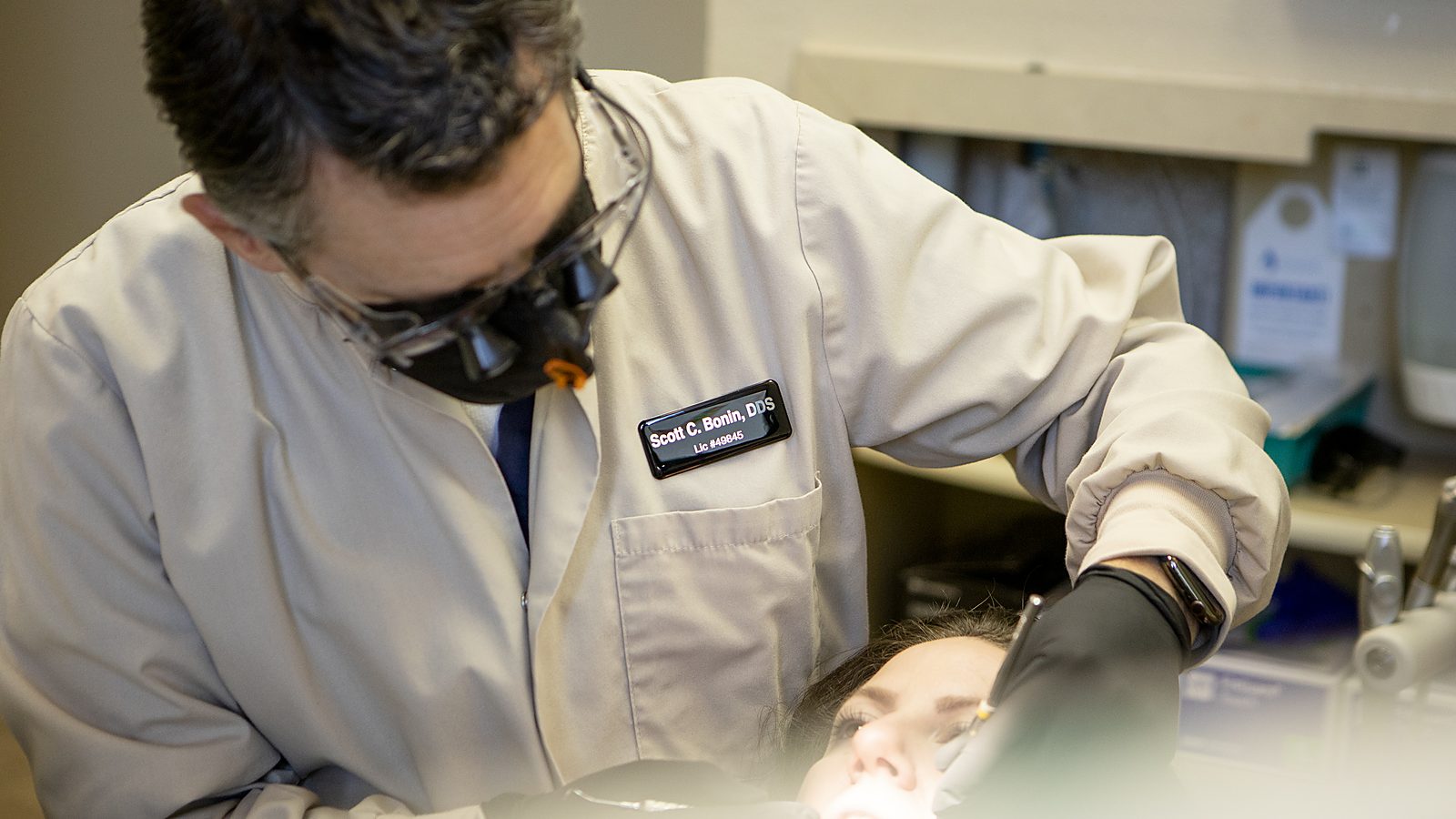
One of the biggest challenges in cosmetic dentistry is managing expectations. You describe what you want your smile to look like, Dr. Bonin recommends treatment, but it’s hard to know if the result will satisfy you until treatment is complete. Digital smile design eliminates this uncertainty by showing you exactly what your smile will look like after treatment before any work begins. You can provide feedback, request modifications, and approve the design before committing to treatment.
How Digital Smile Design Works
Digital smile design uses specialized software and high-resolution facial photography. First, professional photos of your face and smile are captured using specific lighting and angles. These images are loaded into the design software.
Using the software, Dr. Bonin draws digital lines representing ideal smile proportions, tooth lengths, widths, and shapes. The software can reference smile design principles (the golden ratio, ideal tooth-to-face proportions) while allowing complete customization based on your preferences.
The result is a digital rendering showing your face with simulated teeth. You see exactly what your smile will look like with proposed treatment. If you want adjustments (teeth slightly longer, whiter, or wider), Dr. Bonin modifies the design and shows you updated renderings.
Once you approve the design, the digital specifications are used for treatment planning. Lab-fabricated restorations are designed to match the digital specifications. CAD/CAM restorations can be milled to match the design exactly.
Applications in Cosmetic Dentistry
Digital smile design is most useful for comprehensive smile makeovers involving multiple cosmetic treatments. If you’re considering veneers, teeth whitening, gum recontouring, or other cosmetic work, digital design shows the complete result. Dr. Bonin performs the restorative and cosmetic work himself. When the plan calls for gum recontouring or another surgical step, a trusted periodontist performs that portion, working from the same digital design.
For cosmetic dentistry involving crowns or bridges, digital design ensures the finished restorations match the plan. For implant cases where a tooth is being replaced, digital design shows the size and shape of the replacement tooth before the implant is even placed.
Digital design is also valuable for orthodontic-cosmetic combinations. If you’re considering braces followed by cosmetic dentistry, digital design shows the final smile goal, helping you visualize the purpose of braces.
Patient Communication Benefits
Digital smile design revolutionizes patient communication about cosmetic treatment. Instead of abstract discussions about how teeth “should” look, you see digital renderings. You can point to the rendering and say, “I want my smile to look exactly like that.”
This visual communication prevents the disappointment of completed treatment that doesn’t match patient expectations. If you don’t like the design, modifications are made before treatment. By the time treatment starts, you’ve approved every detail.
For Dr. Bonin, digital smile design ensures he understands exactly what you want. Miscommunications about cosmetic details are eliminated because you’re both looking at the same digital rendering.
Design Principles in Digital Smile Design
Digital smile design incorporates established smile design principles. Ideal tooth proportions follow the golden ratio and other mathematical principles associated with beautiful smiles. Tooth color choices are guided by facial undertones and skin tone.
Smile arc (the curvature of the smile following your lower lip) is optimized. Buccal corridors (spaces between teeth and cheeks when smiling) are balanced. Gingival display (how much of the gum shows when smiling) is proportioned to your face.
These principles are built into the design software, but they can be overridden. If you prefer a look that differs slightly from mathematical ideals, that’s fine. Your preferences always take precedence over abstract design principles.
Integration with Treatment Planning
Once a digital smile design is approved, it becomes the blueprint for treatment. If the design calls for five veneers with specific shapes, the lab fabricates veneers matching those specifications. If the design calls for slightly longer teeth with a whiter shade, that’s what gets created.
For guided implant cases, the implant position is planned to ensure the replacement tooth matches the digital design. The oral surgeon placing the implant works from that plan, and Dr. Bonin then fabricates and seats the restoration to fit the exact implant position.
For full-mouth rehabilitation involving multiple restorations, digital design ensures all pieces coordinate. Crowns, veneers, and whitening all work together to achieve the planned result, and every specialist involved in the case is working toward the same approved endpoint instead of improvising in isolation.
Limitations and Reality
Digital smile design shows what teeth will look like but doesn’t account for every individual variation. Your face changes as you smile; the relationship between teeth and lips changes. The digital image is static, so it doesn’t capture the dynamic nature of your smile.
Also, digital design is an approximation. The rendering is as good as the photography and software, but it’s not a perfect prediction. Subtle details of the finished restoration (exact translucency, natural variation in color, small shape irregularities) may differ slightly from the rendering.
This doesn’t mean digital design is inaccurate. It’s a very good approximation that usually matches the final result closely. But you should approach it as a guide and target rather than a pixel-perfect prediction.
Revisions and Adjustments
The beauty of digital smile design is that revisions are easy and free. If you look at the initial design and want adjustments, Dr. Bonin modifies the design and shows you new renderings. This iteration continues until you’re completely satisfied.
Once treatment begins, modifications become more difficult. Digital design iterations cost nothing; actual treatment modifications can be expensive. This is why the digital planning stage is so valuable. You perfect the design digitally before committing resources to actual treatment.
Cosmetic Dentistry Confidence
Many patients considering cosmetic dentistry are anxious about the outcome. “Will I like my new smile?” is a legitimate concern. Digital smile design directly addresses this anxiety by showing you the result before treatment.
Seeing and approving the digital design gives you confidence that the finished result will match your vision. This confidence improves satisfaction even if minor variations occur between the digital image and the final result.
Digital Smile Design at Bonin Dental Care
For cosmetic dentistry cases, Dr. Bonin uses digital smile design as a standard part of treatment planning. We capture professional photographs, design your smile digitally, show you renderings, and refine the design based on your feedback until you’re completely satisfied.
The digital design then guides all treatment planning and restoration fabrication. When your restorations are completed, they match the approved design.
Technology Enhancing Esthetics
Digital smile design represents how technology enhances cosmetic dentistry. Instead of guessing whether you’ll like the result, you see it first. This certainty improves patient satisfaction and reduces post-treatment regret.
The technology also helps Dr. Bonin execute your vision precisely. Knowing exactly what the final smile should look like allows him to plan treatment that achieves that exact result.
Taking the Next Step
If you’re considering cosmetic dentistry like veneers, teeth whitening, or smile enhancement, digital smile design is an excellent tool to explore your options. You can see how your smile would look with various treatments and decide what appeals to you.
Schedule a consultation at Bonin Dental Care in Windsor, California to discuss your cosmetic goals and experience digital smile design. Dr. Bonin will create a rendering showing exactly what your improved smile will look like, giving you confidence in your treatment decision.
Written by
Dr. Scott Bonin, DDSGeneral and cosmetic dentist at Bonin Dental Care in Windsor, California. USC School of Dentistry graduate, Navy veteran, and member of the American Dental Association, California Dental Association, and American Academy of Cosmetic Dentistry. Over 24 years of clinical experience serving Sonoma County families.
View full credentialsClinical note: This article is for educational purposes and does not replace a professional examination. Every patient's situation is unique. If you have questions about your specific dental health, please schedule an appointment or call (707) 838-1400.
Related Services
Explore the treatments behind this topic
Ready to talk with Dr. Bonin about what you just read? Here are the procedures at Bonin Dental Care most closely connected to this article. Each page explains how we do the work, what to expect, and how to get started.
-
Cosmetic
Cosmetic Dentistry & Smile Design
Personalized Smile Design combining porcelain veneers, Zoom in-office whitening, Invisalign, bonding, and custom crowns into one coordinated, high-end cosmetic result.
Learn about this service -
Cosmetic
Porcelain Veneers
Custom porcelain veneers bond to your front teeth to fix color, shape, and minor alignment issues instantly.
Learn about this service -
Cosmetic
Teeth Whitening (Zoom In-Office & Take-Home)
Zoom in-office professional whitening or custom take-home trays that safely brighten stained teeth multiple shades.
Learn about this service
Ready to book your visit with Dr. Bonin?
New patients welcome. Call (707) 838-1400 or request an appointment online.
Keep Reading
More from our library
-
Porcelain Veneers: What They Actually Fix (And What They Don't)
Veneers fix discoloration, chips, gaps, and misalignment. Learn candidacy, longevity, and realistic expectations. Cost varies by case.
-
Laser Dentistry: Applications, Benefits, and Limitations
Dental lasers treat gum disease, reshape tissue, and detect cavities. Learn which procedures benefit from laser technology and where traditional tools still win.
-
Natural-Looking Dental Work: How Modern Materials Match Your Teeth
Zirconia, lithium disilicate, and layered ceramics make restorations nearly invisible. Learn how shade-matching and material science create lifelike results.