Patient Education
Technology & InnovationLaser Dentistry: Applications, Benefits, and Limitations
Dental lasers treat gum disease, reshape tissue, and detect cavities. Learn which procedures benefit from laser technology and where traditional tools still win.
- Technology & Innovation
- Gum Disease
- Cosmetic Dentistry
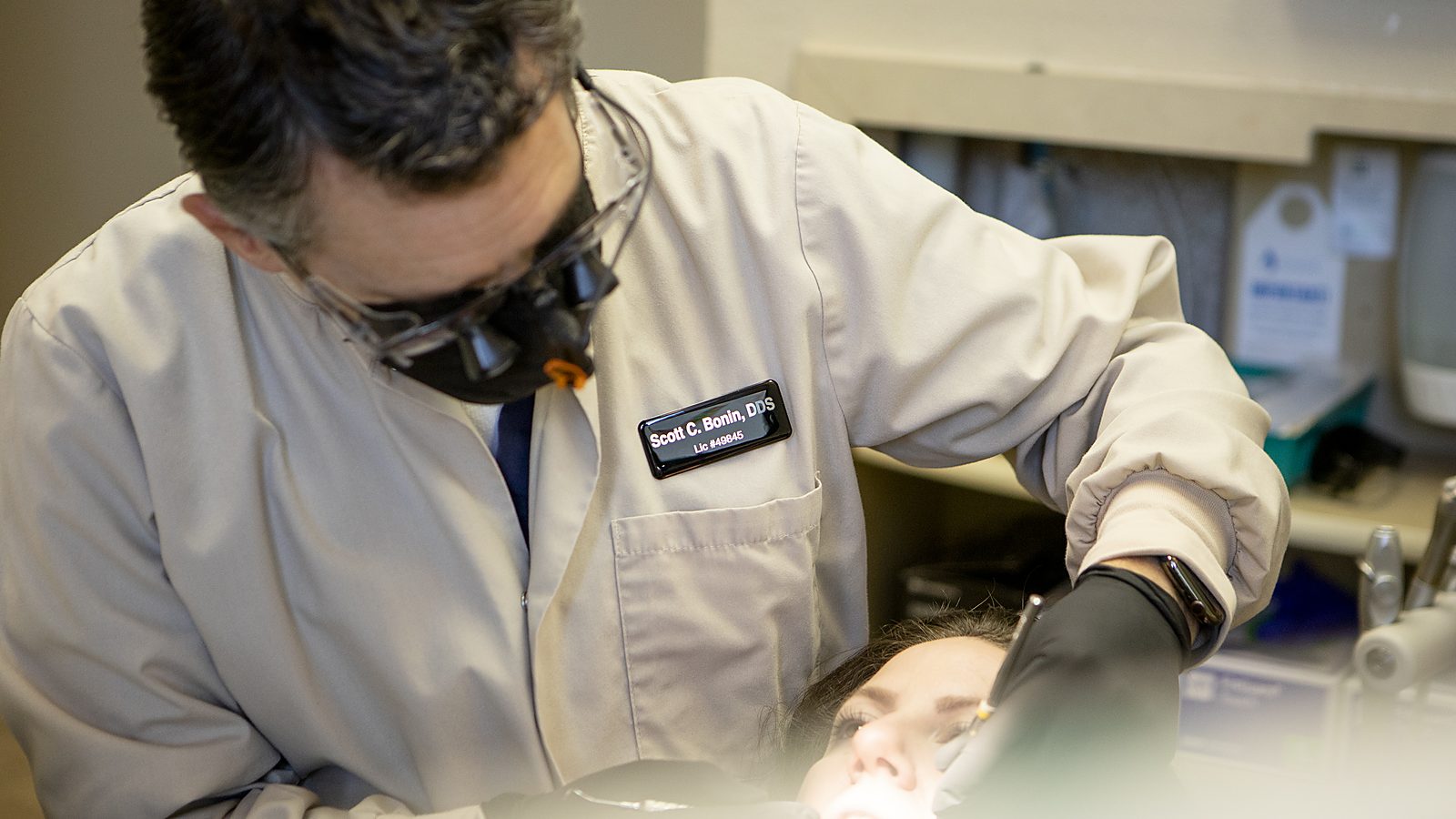
Lasers in dentistry sound futuristic and impressive, which sometimes leads patients to assume they’re better for all applications. The reality is more nuanced. Dental lasers are excellent tools for specific procedures but aren’t universally superior to traditional instruments. Understanding what lasers do well, where they have advantages, and where traditional tools remain standard helps you appreciate their proper role in modern dentistry.
How Dental Lasers Work
Dental lasers use concentrated light energy to cut tissue, coagulate blood, sterilize, and remove material. Different laser wavelengths interact differently with tissue. Some wavelengths are absorbed by water in tissue and cut or ablate (vaporize) tissue. Others are absorbed by pigmented structures and can be used to target specific tissue types or detect changes in tooth structure.
The laser energy is delivered through a small fiber or handpiece. Depending on the laser type and tissue target, the effect ranges from precise tissue removal to sterilization of infected areas to ablation of decayed portions of teeth. The precision of laser energy allows very selective treatment of target tissue while minimizing damage to surrounding structures.
Gum Disease Treatment with Lasers
One of the most successful laser applications is treating gum disease. Periodontal disease involves bacterial infection and inflammation of gum and bone. Traditional treatment involves scaling and root planing (mechanical removal of plaque and tartar). Lasers can be used alongside or instead of traditional scaling to disinfect the periodontal pocket.
Laser-assisted periodontal treatment vaporizes the diseased tissue lining of the periodontal pocket, killing bacteria and allowing healthy tissue to regenerate. Studies show that laser-assisted treatment combined with conventional scaling improves healing and reduces pocket depths more effectively than scaling alone in some cases.
Advantages of laser periodontal therapy include less bleeding, reduced pain, faster healing, and better patient comfort. The laser seals blood vessels, reducing oozing and allowing you to return to normal activity quickly. For patients with severe gum disease, laser-assisted treatment can mean the difference between saving and losing teeth.
Limitations include that lasers don’t replace mechanical cleaning. Tartar and plaque still need mechanical removal. Lasers augment cleaning; they don’t eliminate the need for it. Also, not all patients with gum disease are good candidates for laser treatment. Shallow pockets often respond equally well to traditional scaling with less expense. Deep pockets and aggressive disease benefit most from laser augmentation.
Here is how that maps to our office. Dr. Bonin performs non-surgical gum therapy, meaning deep cleanings and scaling and root planing, at Bonin Dental Care. Laser periodontal surgery and other surgical periodontal treatment are performed by a periodontist he refers to. If your gum disease has progressed past what non-surgical therapy can control, you’ll be seeing a specialist who treats advanced periodontal disease every day, and Dr. Bonin stays on the case for your ongoing maintenance and any restorative work that follows.
Cavity Detection with Laser Fluorescence
Some dental lasers emit fluorescence light that detects decay-induced structural changes in teeth. As decay progresses, tooth mineral crystalline structure changes in ways that fluoresce under certain light wavelengths. This technology can detect very early decay that visible examination might miss.
Advantage: Early detection of decay before it becomes large enough for traditional X-rays to show clearly. Early intervention prevents larger cavities. Disadvantage: Some studies show higher false positive rates (flagging areas as decayed when they’re actually healthy). This can lead to unnecessary treatment of questionable lesions.
At Bonin Dental Care, fluorescence-based cavity detection is a supplemental tool, not a replacement for visual exam and X-rays. We use it to identify suspicious areas, but we still verify decay with X-rays before treatment.
Soft Tissue Shaping with Lasers
Cosmetic dentistry sometimes involves reshaping soft tissue (gums) to improve smile aesthetics. Traditional methods involve scalpel or electrocautery. Lasers can perform gum reshaping with excellent precision and minimal bleeding.
Advantages include precise control, less post-operative bleeding, and less swelling compared to scalpel approaches. Some patients heal faster after laser soft tissue surgery. Disadvantages include cost and patient anxiety about “laser” treatment (even though soft tissue lasers are very safe and don’t hurt more than traditional methods).
For cosmetic veneers or smile design cases where gum contouring improves the overall result, laser soft tissue surgery can be excellent. For straightforward cases, traditional methods work equally well.
Soft tissue laser surgery, gum recontouring, and crown lengthening are surgical procedures, and Dr. Bonin does not perform them at our office. He plans the case, decides how much tissue needs to move to hit the design you approved, and refers that step to a trusted periodontist. Once the tissue heals, he places the veneers or crowns. You get a specialist holding the laser and one office responsible for the finished smile.
Limitations of Laser Dentistry
Dental lasers cannot replace many fundamental dental procedures. You can’t cut a crown or prepare a tooth for a crown with a laser effectively. You can’t fill cavities with a laser. You can’t perform root canal therapy with a laser alone. Traditional instruments remain necessary for most restorative dental work.
Lasers also have cost limitations. Dental laser equipment costs tens of thousands of dollars. This cost is passed to patients through higher procedure fees. While excellent for appropriate applications, using lasers for everything inflates costs without proportional benefit.
Patient perception sometimes leads to unrealistic expectations about lasers. Some patients believe lasers are painless, bloodless solutions to all dental problems. In reality, lasers are excellent for specific applications but not universally superior to traditional instruments.
Laser safety requires careful patient and staff training. Protective eyewear is essential, and certain precautions must be followed. Improper laser use can cause burns or damage to healthy tissue. This is why laser procedures should only be performed by trained practitioners.
Laser Effectiveness Evidence
Research on laser dentistry is mixed. Some applications are clearly superior (certain gum disease treatments, soft tissue surgery). Others show lasers are equivalent to traditional methods but cost more. A few applications show lasers may be inferior (cavity preparation where precise margins matter more than speed).
Well-designed studies comparing laser to traditional treatment show that lasers are best when they offer unique advantages like tissue selectivity, reduced bleeding, or detection capabilities. When they’re used simply because they’re available or trendy, they often cost more without clinical benefit.
Laser Dentistry at Bonin Dental Care
Dr. Bonin uses laser technology strategically for the applications within a general dentist’s scope, such as fluorescence-based cavity detection, where the evidence supports it and where it improves your care or comfort. We don’t use technology for every procedure or because it’s advanced. We use it because it’s the right tool for a specific situation.
Surgical laser applications, including gum recontouring, crown lengthening, and laser periodontal surgery, are performed by the periodontist Dr. Bonin refers to. He diagnoses the problem, explains why the procedure is being recommended, coordinates the referral, and handles your restorative and cosmetic work before and after. If a laser-assisted procedure is part of your plan, we’ll explain why we believe it will improve your outcome, who will be performing it, and whether it’s clinically necessary or an optional enhancement.
The Future of Laser Dentistry
Laser technology in dentistry continues advancing. New wavelengths, delivery systems, and applications are being developed and tested. Some emerging technologies show promise for applications currently limited by traditional methods. As technology advances and evidence accumulates, the role of lasers in dentistry will likely expand.
That said, no technology replaces good clinical judgment and fundamental dental skills. Lasers are tools that enhance care when appropriately applied. Dr. Bonin stays current with emerging technologies and integrates them into practice when evidence supports their use.
Making Informed Decisions
If laser dentistry is recommended for your treatment, ask Dr. Bonin why it’s being recommended and what advantage it provides over traditional methods. Ask about any additional cost and whether it’s medically necessary or optional. Understanding the rationale for any procedure helps you make informed decisions about your care.
Advanced technology is valuable when it improves outcomes or patient experience. Technology for its own sake adds cost without benefit. At Bonin Dental Care, we use technology thoughtfully, choosing tools that genuinely serve your health and wellbeing. Schedule a consultation to discuss your dental needs and the best treatment approach for your situation.
Written by
Dr. Scott Bonin, DDSGeneral and cosmetic dentist at Bonin Dental Care in Windsor, California. USC School of Dentistry graduate, Navy veteran, and member of the American Dental Association, California Dental Association, and American Academy of Cosmetic Dentistry. Over 24 years of clinical experience serving Sonoma County families.
View full credentialsClinical note: This article is for educational purposes and does not replace a professional examination. Every patient's situation is unique. If you have questions about your specific dental health, please schedule an appointment or call (707) 838-1400.
Related Services
Explore the treatments behind this topic
Ready to talk with Dr. Bonin about what you just read? Here are the procedures at Bonin Dental Care most closely connected to this article. Each page explains how we do the work, what to expect, and how to get started.
-
Cosmetic
Cosmetic Dentistry & Smile Design
Personalized Smile Design combining porcelain veneers, Zoom in-office whitening, Invisalign, bonding, and custom crowns into one coordinated, high-end cosmetic result.
Learn about this service -
General & Preventive
Gum Disease Treatment
Non-surgical and laser gum disease treatment to stop progression and restore periodontal health. Scaling, root planing, and maintenance.
Learn about this service -
Cosmetic
Porcelain Veneers
Custom porcelain veneers bond to your front teeth to fix color, shape, and minor alignment issues instantly.
Learn about this service
Ready to book your visit with Dr. Bonin?
New patients welcome. Call (707) 838-1400 or request an appointment online.
Keep Reading
More from our library
-
Digital Smile Design: Previewing Your Results Before Treatment
Digital smile design software lets you see a simulation of your finished smile before any work begins. Learn how it works and its role in treatment planning.
-
Natural-Looking Dental Work: How Modern Materials Match Your Teeth
Zirconia, lithium disilicate, and layered ceramics make restorations nearly invisible. Learn how shade-matching and material science create lifelike results.
-
Can Cosmetic Dentistry Fix a Gummy Smile?
A gummy smile has several possible causes, each with a different treatment. Learn about crown lengthening, lip repositioning, and orthodontic solutions.