
Patient Education
Technology & InnovationGuided Implant Surgery: Precision Through Technology
Computer-guided surgery uses CT scans and 3D-printed guides to place implants with sub-millimeter accuracy. Learn the process and its advantages.
- Technology & Innovation
- Dental Implants
- Restorative Dentistry
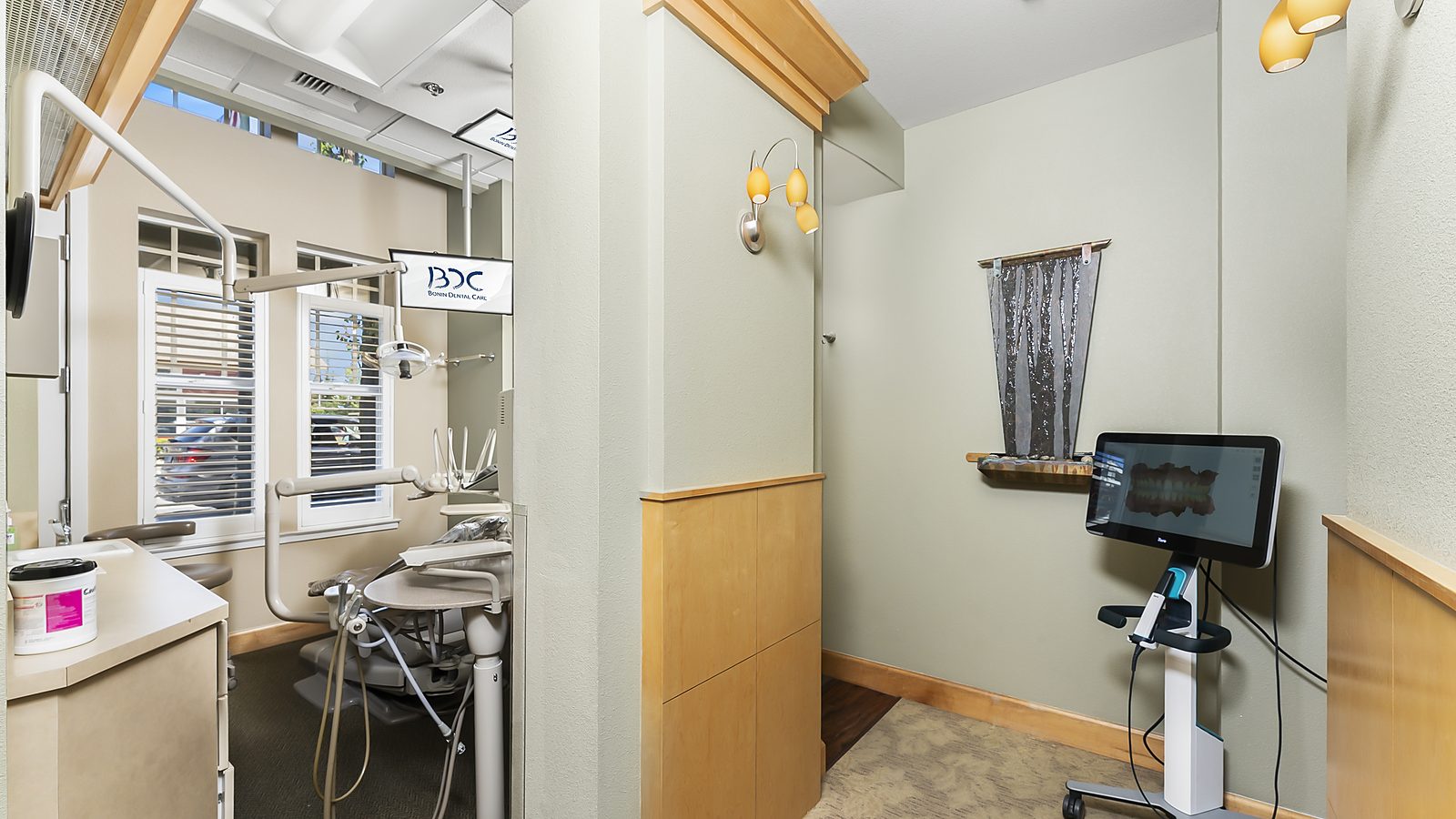
Dental implant surgery is precise work. The implant position determines how the final crown will look, how your bite will function, and ultimately whether the implant succeeds long-term. Guided implant surgery uses computer planning and 3D-printed surgical guides to place implants with precision that freehand surgery can’t consistently achieve. Understanding this technology helps you appreciate why guided surgery is becoming standard of care for complex implant cases.
Traditional Implant Surgery Challenges
Before guided surgery, implant placement relied on the surgeon’s visual judgment and palpation of bone landmarks. The dentist or surgeon would drill holes in the jaw guided only by their understanding of underlying anatomy and their surgical expertise. Different surgeons achieved different results depending on their skill and experience.
This traditional approach had limitations. The surgeon couldn’t see bone anatomy in three dimensions. Hidden nerves, sinuses, or bone deficiencies couldn’t be visualized before drilling began. Deviation from ideal implant angles or positions might only become apparent after the implant was placed. Corrections mid-surgery were often impossible.
For complex cases with limited bone, severe bone loss, or proximity to vital structures, traditional freehand placement was risky. Nerve damage, sinus perforation, or inadequate bone support were genuine risks. Patient outcomes varied based on surgeon skill.
How Guided Surgery Works
Guided implant surgery begins with high-resolution CBCT imaging. The three-dimensional scan shows bone anatomy in complete detail: height, width, and density, plus exact locations of the inferior alveolar nerve, lingual structures, and sinus anatomy.
Dr. Bonin uses specialized computer software to plan the implant positions before anyone touches a drill. The software considers bone anatomy, final crown position, bite mechanics, and strategic implant placement. Multiple treatment scenarios can be analyzed virtually before he and the oral surgeon commit to the final plan.
Once the optimal implant position is determined, the software generates a 3D-printed surgical guide. This guide is a template that directs the implant drill at the exact angle and depth planned in software. The guide’s sleeve fits over the bone and drill, preventing deviation from the planned position.
On surgery day, the guide is placed on your jaw, secured with temporary fixation or bone screws. The drill passes through the guide’s sleeves, creating holes precisely where planned. Implants are placed into these pre-drilled holes at exactly the planned angles and depths. The surgical guide ensures that implant positioning matches the digital plan.
Advantages of Guided Surgery
The most obvious advantage is precision. Implants placed with guided surgery are typically within 1 millimeter of planned position and within 5-10 degrees of planned angle. This precision is impossible to achieve with freehand surgery consistently.
This precision translates to clinical advantages. Implants placed in optimal positions function better, look better, and succeed more reliably. Crowns fabricated from the digital plan fit perfectly because the implants are exactly where they were supposed to be.
Guided surgery is also safer. By visualizing anatomy before drilling, the surgical team can avoid nerve damage, sinus perforation, and other complications. Optimized implant positioning avoids bone areas where complications might occur.
Guided surgery is faster. Because the surgeon doesn’t need to anatomically orient and make incremental positioning adjustments, surgery is streamlined. Less bone removal is needed. The implant can be placed directly without trial and error. Shorter surgery time means less tissue trauma and faster healing.
Guided surgery results in less post-operative swelling and bruising because trauma is minimized. Bone is removed only where needed. Blood vessels aren’t unnecessarily damaged. Patients recover faster with less discomfort.
Complex Cases Where Guided Surgery Excels
Guided surgery is most valuable in complex cases where traditional freehand placement would be risky or where precision is critical. Multiple-implant cases where implant coordination matters benefit from guided surgery. Patients with limited bone, bone loss, or compromised anatomy that would make freehand placement risky are excellent candidates.
Cases involving proximity to vital structures (sinuses, nerves) are ideal for guided surgery. The computer planning ensures implants avoid these structures with certainty. Cases where final esthetic result depends on precise implant positioning (anterior tooth replacement) benefit from guided surgery’s precision.
Technology Integration
Guided surgery integrates beautifully with other digital technology. The 3D scan, digital planning, and surgical guide all flow together. The digital implant position is used for crown design, so the crown is fabricated to fit the exact implant position before surgery. After implant placement, the digital plan and actual result are compared, ensuring the implants were placed as planned.
This complete digital workflow from planning through restoration delivery ensures consistency and optimal results.
Cost Considerations
Guided surgery requires investment in technology: CBCT equipment, planning software, and 3D printing. The surgical guide costs money to fabricate. These costs are substantial but are offset by improved outcomes and reduced complication rates.
Dr. Bonin believes guided implant surgery is worth the investment for complex cases, and he will say so when he plans yours. The improved precision, safety, and outcomes justify the additional technology cost. For simpler single-implant cases where bone anatomy is straightforward, a guide might not be necessary, though he will plan one and send it to the surgeon if you and the surgeon prefer that approach. The call on how the surgery itself is performed belongs to the surgeon.
Patient Benefits Beyond Surgery
Patients benefit from guided surgery beyond just the surgical procedure. Before surgery, you see your digital plan. You see exactly where implants will be placed and what the final result will look like. This digital preview removes uncertainty and gives you confidence in the plan.
Many patients find the guided surgery concept reassuring. Knowing that implants are being placed by computer guidance and 3D-printed guides feels safer than traditional surgery. The visualization and planning process demystify surgery and reduce anxiety.
Guided Surgery Success Rates
Studies comparing guided and freehand implant surgery show superior outcomes with guided surgery. Implant success rates are higher. Complication rates are lower. Patient satisfaction is higher. Long-term implant survival is improved with guided surgery because implants are positioned optimally for long-term function.
These data support guided surgery as the modern standard of care for complex implant cases.
Guided Implant Surgery at Bonin Dental Care
Dr. Bonin plans guided implant cases with 3D-printed surgical guides and partners with a trusted oral surgeon who performs the placement. We use high-resolution CBCT imaging and advanced planning software to design optimal implant positions, and the 3D-printed guide carries that plan into surgery for precise placement.
For complex cases involving multiple implants, limited bone, or esthetic concerns, a guided approach is what Dr. Bonin plans for and recommends, and he coordinates it with your oral surgeon. For simpler cases, he talks it through with you and the surgeon to decide whether traditional freehand surgery is appropriate.
The Future of Implant Surgery
Guided implant surgery is becoming increasingly standard as technology becomes more accessible and familiar to clinicians. In the future, nearly all implant surgery might be guided because the precision and outcomes justify the technology cost. Emerging technologies like real-time image guidance and robotic assistance might further improve precision.
For now, guided surgery represents the state of the art in implant placement. Patients who receive implants with guidance are accessing the most advanced surgical technology available.
Taking the Next Step
If you’re considering dental implants, start with Dr. Bonin. He is a general dentist, so he does not perform the surgery himself. What he does is evaluate your case, capture the 3D imaging, plan exactly where the implant needs to sit to support the crown he will eventually build, and hand that plan to the oral surgeon or periodontist who places it. For complex cases, or any case where precision matters, that planning is what separates an implant that lasts decades from one that gives you trouble.
Schedule a consultation at Bonin Dental Care in Windsor, California. We will map out your implant case from imaging to final crown, tell you exactly who handles which step, and coordinate the whole thing so you are never left managing it yourself.
Written by
Dr. Scott Bonin, DDSGeneral and cosmetic dentist at Bonin Dental Care in Windsor, California. USC School of Dentistry graduate, Navy veteran, and member of the American Dental Association, California Dental Association, and American Academy of Cosmetic Dentistry. Over 24 years of clinical experience serving Sonoma County families.
View full credentialsClinical note: This article is for educational purposes and does not replace a professional examination. Every patient's situation is unique. If you have questions about your specific dental health, please schedule an appointment or call (707) 838-1400.
Related Services
Explore the treatments behind this topic
Ready to talk with Dr. Bonin about what you just read? Here are the procedures at Bonin Dental Care most closely connected to this article. Each page explains how we do the work, what to expect, and how to get started.
-
Restorative
Dental Implant Restoration (Surgical Care Coordinated with Specialists)
Dr. Bonin coordinates the surgical placement of your dental implant with a trusted oral surgeon or periodontist, then designs and seats the custom crown that finishes the case at our Windsor office.
Learn about this service -
Restorative
Restorative Dentistry
Comprehensive restorative dentistry rebuilds multiple teeth using crowns, bridges, fillings, implants, and strategic planning.
Learn about this service -
Restorative
Full-Arch Dental Implants (All-on-4 / All-on-X, Coordinated with Specialists)
Full-arch restoration with All-on-4 or All-on-X implants. The surgical phase is performed by a trusted oral surgeon Dr. Bonin coordinates with, and Dr. Bonin designs and seats the final prosthesis at our Windsor office.
Learn about this service
Ready to book your visit with Dr. Bonin?
New patients welcome. Call (707) 838-1400 or request an appointment online.
Keep Reading
More from our library
-
A Step-by-Step Guide to Getting a Dental Implant (From Consult to Crown)
Dental implant process explained appointment by appointment. Learn imaging, surgery, healing, abutment, and final crown with realistic timelines.
-
Dental Implants vs Bridges: Which Is Right For Your Missing Tooth?
Compare dental implants and bridges side-by-side. Learn longevity, cost, candidacy, bone health, and which option fits your situation best.
-
How Modern Dental Materials Have Changed in the Last Decade
Zirconia, lithium disilicate, bioactive cements, and nano-composites have transformed durability and aesthetics. A look at what is different and why it matters.