Patient Education
Technology & InnovationDigital Impressions vs Traditional Molds: Why We Switched
Intraoral scanners eliminate gag-inducing impression trays. Learn how digital impressions work, their accuracy advantages, and what the experience is like.
- Technology & Innovation
- Patient Comfort
- Dental Tips
One of the most uncomfortable aspects of traditional dental care is having impression trays packed with goopy material shoved into your mouth. The material tastes bad, the tray triggers your gag reflex, and holding still while the material sets feels like an eternity. Digital impression technology eliminates this discomfort entirely. At Bonin Dental Care, we’ve transitioned to digital impressions because the advantages for patients and clinical outcomes are substantial.
Traditional Impression Methods
Traditional impressions use impression trays filled with alginate or polyether impression material. The dentist pushes the tray into your mouth and holds it steady while the material sets (usually 3-5 minutes). The discomfort comes from gagging, the taste, the sensation of pressure, and the difficulty breathing normally with a tray in your mouth.
Beyond patient experience, traditional impressions have accuracy limitations. The material distorts slightly during removal from your mouth, and the model created from the impression is a copy of the original, not a perfectly precise reproduction. If a crown or other restoration is being fabricated based on a traditional impression, subtle inaccuracies can affect the fit.
Physical impression models also take up space, require shipping if sent to a lab, and can be damaged or lost. The traditional workflow involves taking the impression, creating a model, and sending it off-site for crown or appliance fabrication. This delays treatment and creates dependency on physical transportation.
How Digital Impressions Work
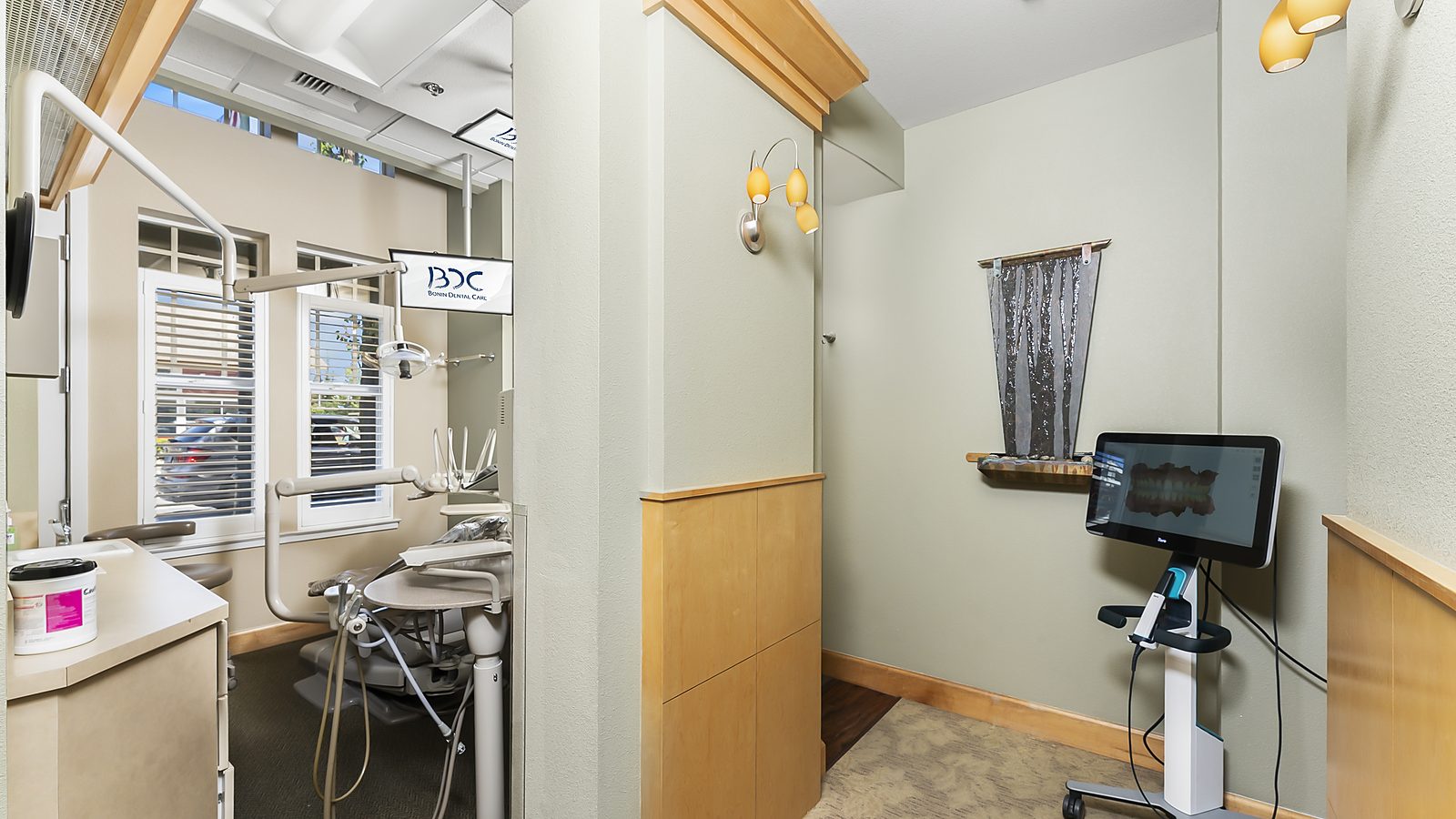
Digital impressions use an intraoral scanner, a small handheld device with a camera and light source. The scanner captures thousands of images of your tooth and surrounding structures, which computer software stitches together into a detailed 3D digital model. The entire process takes 2-3 minutes and involves no gag-inducing trays or unpleasant materials.
The scanner looks almost like a dental mirror on a small stick. You see it approach your tooth and might hear a soft clicking sound as images are captured. Many patients find the process more pleasant than traditional impressions simply because there’s no uncomfortable tray or material.
Digital impressions are captured as data files that can be instantly shared with labs, specialists, or transferred between appointments. The 3D model displays on a computer screen, allowing you and Dr. Bonin to see exactly what will be used to fabricate your restoration.
Accuracy Advantages
Digital impressions are more accurate than traditional impressions. The scanner captures detail at sub-millimeter precision, and there’s no distortion from material removal or model fabrication. A crown designed from a digital impression often fits more precisely than one from a traditional impression, reducing the need for adjustments at delivery.
This accuracy matters particularly for dental implants and crowns. An implant crown that doesn’t fit well can cause complications. An intraoral scanner captures implant position with precision, allowing labs to fabricate crowns that fit predictably. Traditional impressions of implants are difficult and often result in less precise fits.
Digital impressions are also more reliable. Traditional impression material sometimes doesn’t set properly, requiring retakes. Digital scanning rarely has these issues. If part of the scan is unclear, we simply rescan that area instantly.
Patient Comfort Benefits
The comfort advantages are immediate and significant. No gagging, no unpleasant taste, and much faster process (2-3 minutes versus 5-10 minutes for traditional impressions including setup and material setting). Patients with severe gag reflexes especially appreciate digital impressions because there’s no tray triggering their reflex.
Patients with limited mouth opening find digital impressions easier because the scanner doesn’t require a bulky tray. Patients with tremors or difficulty holding still can move around slightly without disrupting a digital scan, whereas movement during traditional impression material setting ruins the impression.
For cosmetic dentistry patients, digital impressions allow you to see the 3D model of your tooth before restoration is fabricated. You can see exactly what the restoration will look like and provide feedback before the final product is made.
Clinical Workflow Advantages
Digital impressions integrate beautifully with modern dental technology. The 3D model can be used with CAD/CAM dentistry for same-day crown delivery. Restorations designed on the digital model and milled at the dental office are completed in a single appointment, eliminating the need for temporary crowns and second appointments.
Labs fabricating restorations from digital impressions can design and mill restorations faster than from traditional models. Some crowns can be fabricated and shipped within 48 hours, compared to a week or longer for traditional workflows. This speed reduces the time you spend with temporary restorations.
Digital files allow Dr. Bonin to consult with specialists remotely. If a complex case requires input from a specialist, the digital impression model can be shared electronically for expert review without shipping physical models.
Cost Considerations
Digital scanners represent a significant investment for dental practices. Equipment costs thousands of dollars, and software licensing involves ongoing fees. At Bonin Dental Care, we’ve made this investment because we believe patient comfort and clinical outcomes matter.
Patients don’t pay additional fees for digital impressions compared to traditional impressions. The cost is built into the overall treatment fee. In fact, digital impressions sometimes reduce overall costs through faster workflows and fewer adjustment appointments, partially offsetting the practice investment.
Limitations and Exceptions
Digital impressions work excellently for most situations, but a few exceptions exist. Patients with heavily restored teeth with large metallic restorations sometimes have difficulty scanning those teeth with certain scanner technologies because light reflects off metal. In these rare cases, we might use a traditional impression or a hybrid approach combining digital and traditional elements.
Digital impressions require a computer system and software, making them dependent on technology functioning properly. If scanning equipment malfunctions, we have traditional impression backup methods available.
Some specialized applications (like very large bridge cases with many teeth) might require traditional impressions or a combination approach, though digital technology is advancing rapidly to handle these situations better.
The Patient Experience at Bonin Dental Care
When you need an impression at Bonin Dental Care, Dr. Bonin will use our digital scanner. The process is quick and comfortable. You’ll see the 3D model displayed on the screen and can provide feedback on what you see. If restorations are being designed, you might collaborate on the design digitally, seeing mock-ups before final fabrication.
For cosmetic dentistry cases, this preview of results is particularly valuable. You can see digital renderings of your final smile and provide feedback. For crowns and complex restorations, the digital model ensures everything fits precisely.
Technology Advancing Dentistry
Digital impressions represent how modern technology is transforming dental care toward patient comfort and precision. We’re excited to use these tools because they make your experience better and your restorations fit better. As technology continues advancing, we’ll continue adopting tools that serve your health and wellbeing.
If you have questions about digital impressions or want to experience this technology, schedule a consultation at Bonin Dental Care in Windsor, California. Dr. Bonin is committed to using the most advanced dental technology available to give you the best possible care and experience.
Written by
Dr. Scott Bonin, DDSGeneral and cosmetic dentist at Bonin Dental Care in Windsor, California. USC School of Dentistry graduate, Navy veteran, and member of the American Dental Association, California Dental Association, and American Academy of Cosmetic Dentistry. Over 24 years of clinical experience serving Sonoma County families.
View full credentialsClinical note: This article is for educational purposes and does not replace a professional examination. Every patient's situation is unique. If you have questions about your specific dental health, please schedule an appointment or call (707) 838-1400.
Related Services
Explore the treatments behind this topic
Ready to talk with Dr. Bonin about what you just read? Here are the procedures at Bonin Dental Care most closely connected to this article. Each page explains how we do the work, what to expect, and how to get started.
-
General & Preventive
General Dentistry
Comprehensive exams, professional assessments, and preventive strategies designed to catch problems early and keep your smile healthy.
Learn about this service -
Comfort & Sedation
Sedation & Anxiety Dentistry
Oral conscious sedation and nitrous oxide (laughing gas) help anxious patients complete necessary dental care in a calm, comfortable state. Dr. Bonin takes the time to know you, educate you, and choose the right approach.
Learn about this service -
General & Preventive
Dental Cleanings
Professional cleanings remove tartar and buildup that home care cannot reach, preventing decay and gum disease.
Learn about this service
Ready to book your visit with Dr. Bonin?
New patients welcome. Call (707) 838-1400 or request an appointment online.
Keep Reading
More from our library
-
Electronic Health Records in Dentistry: How They Improve Your Care
Digital records enable better coordination, faster referrals, and comprehensive treatment histories. Learn how EHR systems benefit patients directly.
-
How Modern Dental Materials Have Changed in the Last Decade
Zirconia, lithium disilicate, bioactive cements, and nano-composites have transformed durability and aesthetics. A look at what is different and why it matters.
-
Teledentistry: When a Virtual Visit Makes Sense
Virtual consultations work for follow-ups, second opinions, and triage. Learn what teledentistry can and cannot evaluate remotely.